Data Science Updates is the University of Wisconsin-Madison's resource for news, training, events, and professional opportunities in data science, brought to you by the Data Science Institute, powered by American Family Insurance, and the Data Science Hub.
October 29, 2025
|
|
|
|
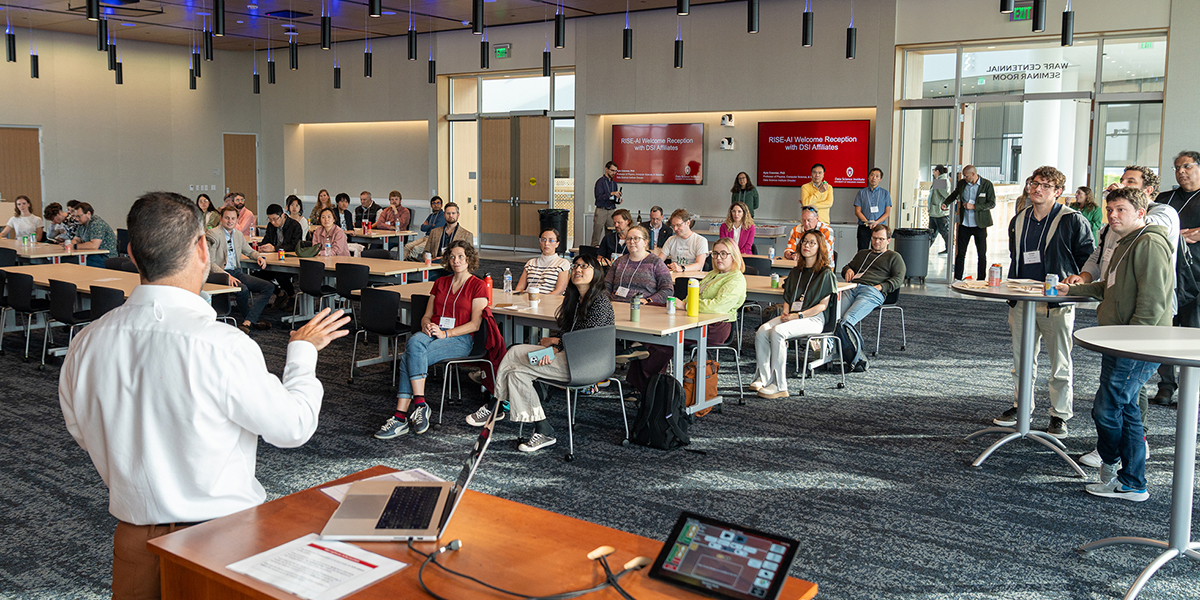
The Data Science Institute recently hosted a reception welcoming new RISE-AI faculty to UW–Madison. This event provided them with an opportunity to meet colleagues with shared research interests and learn about the RISE-AI Collaboration HQ, which will link new RISE faculty with existing campus networks advancing scholarship in the field of artificial intelligence.
“Realizing the full potential of the RISE initiative requires connecting our new colleagues with UW’s established research community,” says DSI Director Kyle Cranmer. “This event, which brought new RISE-AI faculty together with DSI’s extensive network of affiliated faculty and staff, was a great step in that direction.”
|
|
|
|
Generative AI is an ethical minefield for academics. We might not question a researcher who asks ChatGPT to summarize an article or generate an outline. But what about asking generative AI to analyze data or distill a manuscript into a submission-ready abstract? Luke Plonsky, professor of applied linguistics at Northern Arizona University, will address this topic in a brown bag talk on November 6, 11:30-12:30, 1418 Van Hise. This talk is sponsored by the Language Institute, Second Language Acquisition PhD Program, Language Sciences, and the Data Science Institute.
|
|
|
|
Don’t forget to register for the 2025 Wisconsin RISE summit on November 17, 10am-2pm at the Wisconsin Union. This event is an opportunity to learn about the RISE initiative’s progress over the past year and what’s to come in the months ahead. The agenda includes a plenary session featuring campus leaders followed by breakout sessions on each of the initiative’s three focus areas: RISE-AI, RISE-EARTH, and RISE-THRIVE. The summit will conclude with lunch and closing remarks.
|
|
|
|
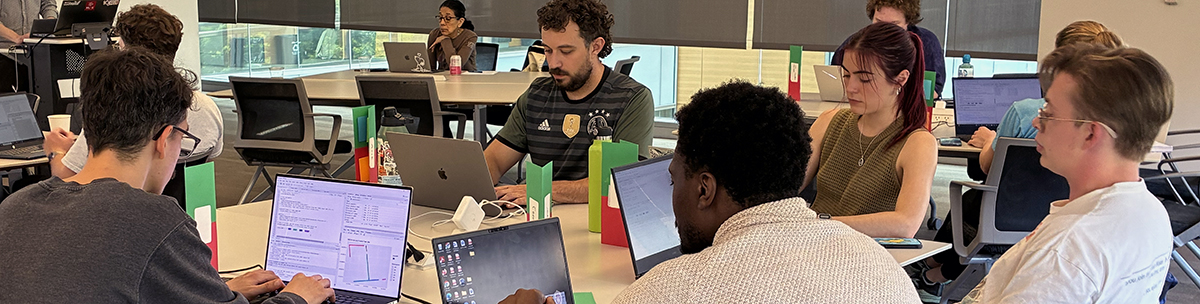
October 31, 10:00 a.m. - 12:00 p.m.; Online This workshop teaches learners to use RStudio and Git to keep track of file versions, host version-controlled files on the campus GitLab instance, and synchronize files between different computers. Individuals with a UW NetID and a working knowledge of R and RStudio will get the most out of this workshop.
|
November 3, 5:30 p.m. - 7:30 p.m.; Online R is a free, open-source software and programming language for statistical computing and graphics. R is particularly popular for its graphical capabilities, but it is also prized for its GIS capabilities, which make it relatively easy to generate raster-based models. Topics covered in this workshop include: setting up R and RStudio, basic syntax, vectors, matrix and data frames,
importing and working with data, and basic charting and plotting.
|
November 4, 5:45 p.m. - 7:15 p.m.; Online. Designed for students, Excel 1 introduces students to basic spreadsheet terminology and the simple navigation of the Excel desktop. This course teaches the skills necessary to construct an operative spreadsheet and create graphs or charts from data.
|
November 6, 11:00 a.m. - 12:00 p.m.; 2564C Morgridge Hall. This seminar will mainly focus on reading and discussion of recent research, including papers from top conferences such as SIGMOD, PODS, VLDB, CIDR, and others. Practice talks (for upcoming conferences or exams) and sharing other submissions/papers you find valuable are welcomed.
|
|
|
|
Have questions about anything data science-related? Come see the Data Science Hub facilitators at Coding Meetup on Tuesdays and Thursdays from 2:30-4:30 p.m. CT. To join Coding Meetup, join data-science-hubgroup.slack.com.
|
|
|
|
October 29, 12:30 p.m. - 1:30 p.m.; Orchard View Room, Wisconsin Institute for Discovery. Join the SILO group in welcoming Professor Sujay Sanghavi from UT–Austin for his talk on diffusion language models (DLMs). DLMs represent a nascent but promising alternative to GPT-style autoregressive (AR) language models: as opposed to generating one token at a time left to right, DLMs start from a set of noise tokens which they iteratively refine into text. The any-order generation can potentially result in more consistent text, while parallel generation can potentially be faster. In practice however, parallel generation results in big drops in output quality, and DLMs currently do not match AR models except if used in one-token-at-a-time mode.
|
DotData x WAISI Club Meeting
October 29, 6:00 p.m.; 2532 Morgridge Hall. Join dotData and the Wisconsin AI Safety Initiative (WAISI) for a club social event intended to foster connection within the undergraduate data science community at UW–Madison.
|
October 31, 9:30 a.m. - 10:45 a.m.; 3610 Morgridge Hall. Join Sundus Keles and Kris Sankaran for a reading group on AI and genomics, hosted weekly on Fridays.
|
Applied and Computational Math Seminar
October 31, 2:25 p.m.; 901 Van Vleck Hall. Join the Applied and Computational Math Seminar in welcoming Hyukpyo Hong from UW–Madison for a talk titled Finite-Dimensional Representations of the Koopman Operator: Equation and Data-Driven Approaches.
|
October 31, 12:00 p.m. - 1:00 p.m.; 7560 Morgridge Hall. Join the Biostatistics and Medical Informatics Department weekly seminar in hosting Huan Sun of Oregon State University for a talk.
|
DotData Hosts Amber Olson
November 5, 6:00 p.m.; 2532 Morgridge Hall. Join dotData in hosting Amber Olson, a Wisconsin alum and data engineer at American Family Insurance. She will be sharing her experiences working in the data industry, as well as her journey from UW–Madison to her current role, the skills that helped her succeed, and insights into the world of data engineering.
|
November 7, 12:15 p.m. - 1:30 p.m.; 175 Science Hall. Join the GeoDS Lab@UW-Madison and UW–Madison's Data Science Institute in welcoming Dr. Meiliu Wu of the University of Glasgow, UK. Dr. Wu's talk will focus on three perspectives—data, methodology, and explainability—to discuss how we can enhance the geospatial intelligence of AI models, a core question in the development of GeoAI.
|
|
|
|
|
|
|
DATA VISUALIZATION OF THE WEEK
|
|
|
|
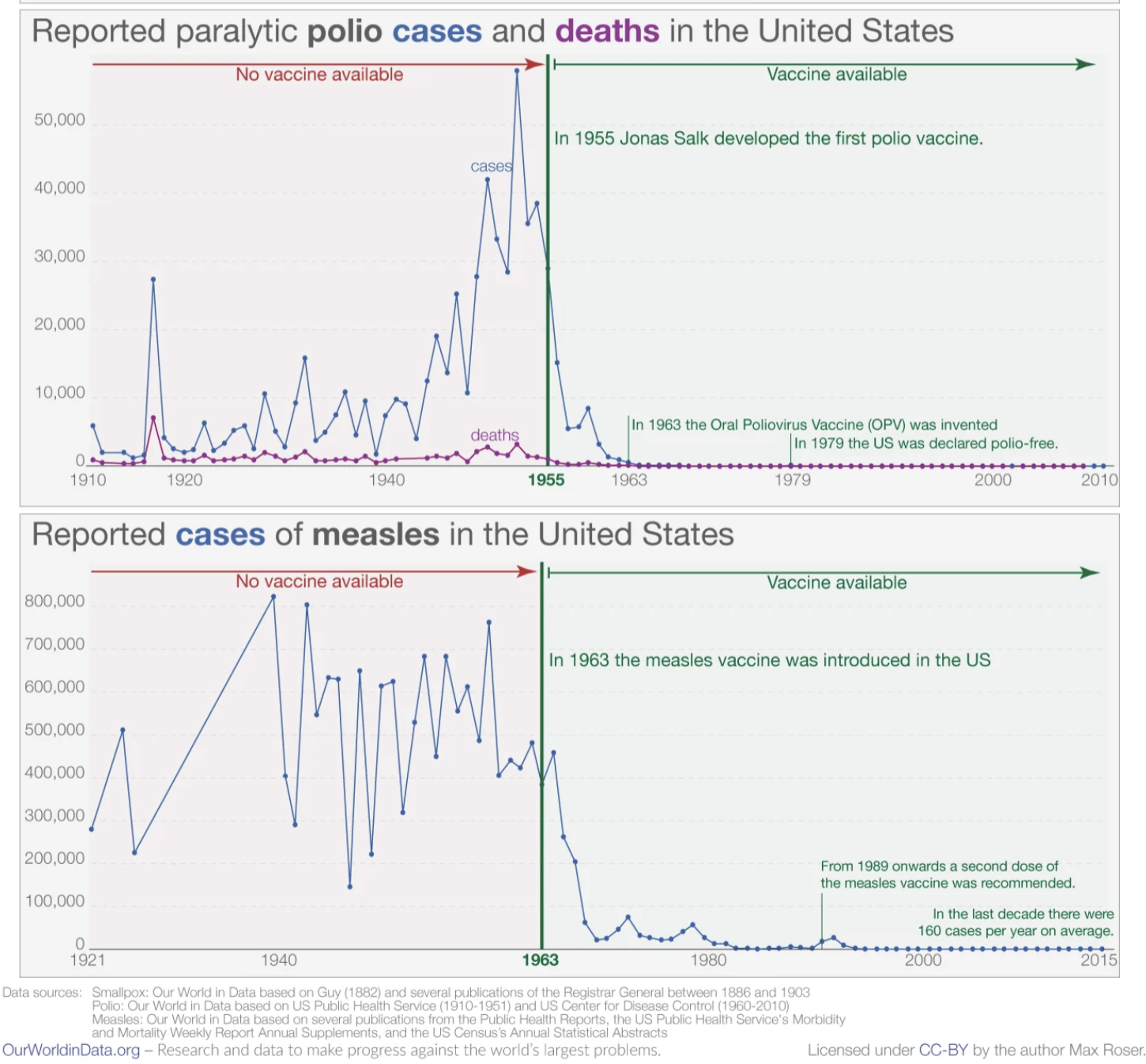
Many diseases, such as polio, measles, and smallpox may seem like an issue from the past. However, it wasn't until recently that the World Health Organization declared these diseases officially eradicated. This huge scientific achievement was only possible due to the development of vaccines. As visualized in the graphic below, the volume of people infected with polio was over 50,000 until the first polio vaccine was introduced in 1955. After that, with consequent improvements made to the vaccine, the amount of both infections and deaths reached zero. The case is similar for measles, reinforcing how significant the development of these vaccines were for public health.
|
|
|
|
Reposted from Our World in Data: Research and data to make progress against the world’s largest problems.
|
|
|
|
Data Science Updates is a collaborative effort of the Data Science Institute and Data Science Hub. This newsletter was originally created by the Data Science Hub and published as Hub Updates.
Use our submission form to send us your news, events, opportunities and data visualizations for future issues.
|
|
|
|
|