Data Science Updates is the University of Wisconsin-Madison's resource for news, training, events, and professional opportunities in data science, brought to you by the Data Science Institute, powered by American Family Insurance, and the Data Science Hub.
December 10, 2025
|
|
|
|
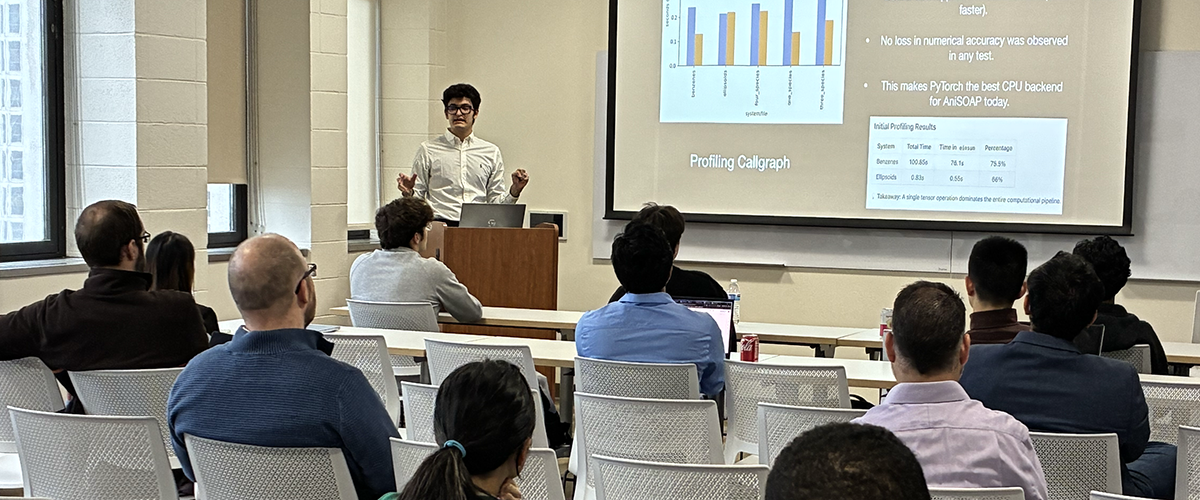
The third cohort of Open Source Program Office (OSPO) interns recently wrapped up and presented their projects to their faculty mentors and other supporters. The ten interns in this cohort worked with faculty mentors from the School of Computer, Data, and Information Sciences, the College of Agriculture and Life Sciences, the College of Engineering, and the Space Sciences and Engineering Center. To date, 24 OSPO interns from UW–Madison and Madison College have completed 20 open source projects. Hiring is underway for our fourth cohort of interns, and they will start working on their projects in February. Based at the Data Science Institute, OSPO is supported by the Alfred P. Sloan Foundation.
|
|
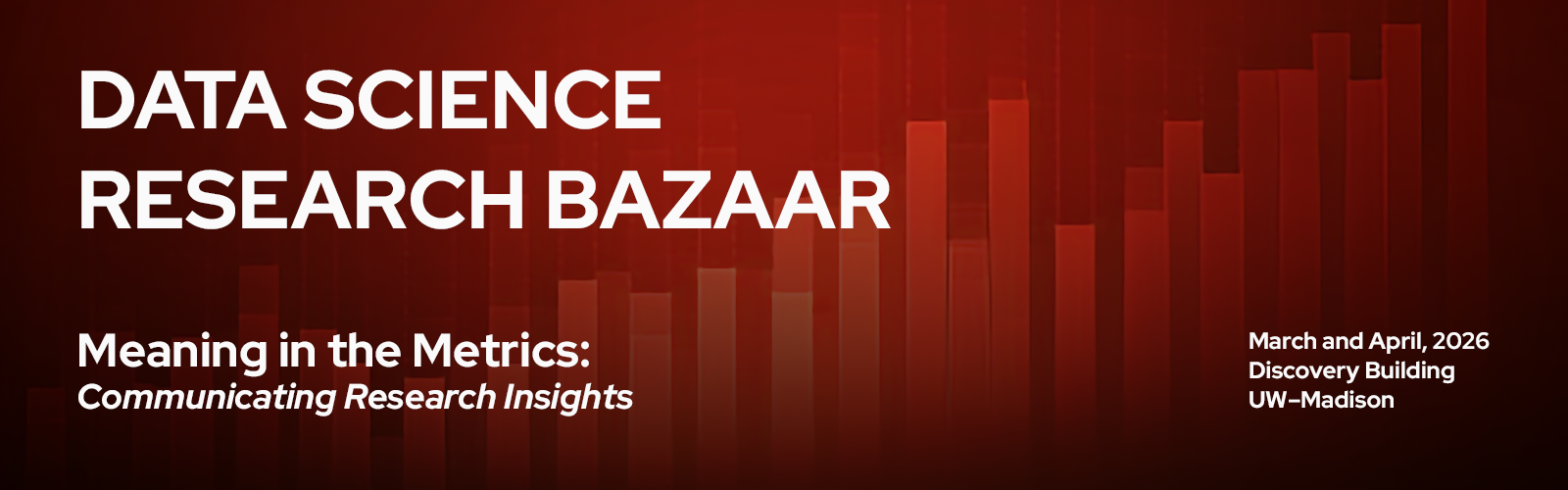
The Data Science Research Bazaar is back—and we’re looking for presenters! Researchers, students, and professionals are invited to submit proposals related to this year’s theme—Meaning in the Metrics—highlighting creative ways to turn data and research into compelling stories. We’re also interested in presentations more broadly focused on data science and computation. Give a lightning talk, share a poster, or lead a training or focused discussion at events in March and April, with the main conference on March 19. Submit your proposal by January 15.
|
|
|
|
Are you a data storyteller eager to share your work with the campus community and beyond? Are you looking for a place to present your innovative approach to data visualization? Bucky’s Data Viz Challenge provides a platform for UW–Madison students, faculty, and staff to showcase their creative data visualization skills. Check out the details for our student contest and faculty and staff competition. All entries must be received by 11:59 pm on Wednesday, January 7.
|
|
|
|
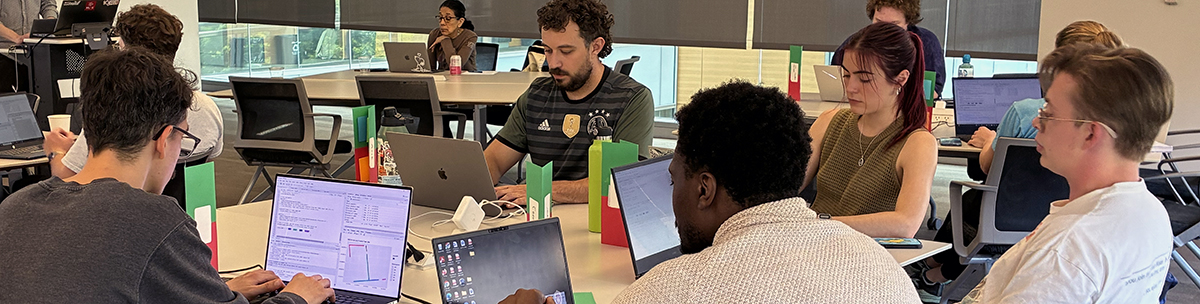
Software Carpentry aims to help graduate students and other researchers get their work done in less time and with less pain by teaching them basic research computing skills. In this hands-on workshop, you will learn basic concepts and tools including program design, version control, data management, and task automation. This workshop meets online, January 12-16, 9:00 a.m.-1:00 p.m. You don't need to have any previous knowledge of the tools that will be presented at the workshop. We encourage you to register early.
|
|
|
|
January 12-16, 9:00 a.m. - 1:00 pm; online. Software Carpentry aims to help graduate students and other researchers get their work done in less time and with less pain by teaching them basic research computing skills. This hands-on workshop will cover basic concepts and tools including program design, version control, data management, and task automation.
|
January 12, 10:00 a.m. - 3:00 pm; 4218 Sewell Social Sciences. In this class you'll learn the basic of how Stata works and how to use it. This class (or comparable experience) is a prerequisite for the rest of SSCC's Stata training. It will also prepare you to excel in classes that use Stata, like Sociology 361 or Economics 410. We suggest new graduate students consider taking this class before or during their first semester.
|
|
|
|
Have questions about anything data science-related? Come see the Data Science Hub facilitators at Coding Meetup on Tuesdays and Thursdays from 2:30-4:30 p.m. CT. To join Coding Meetup, join data-science-hubgroup.slack.com.
|
|
|
|
December 10, 12:30 p.m. - 1:30 p.m.; Researcher's Link, Wisconsin Institute for Discovery. Join the Systems, Information, Learning, Optimization (SILO) group in welcoming Professor Yao Xie from the H. Milton Stewart School of Industrial and Systems Engineering at the Georgia Institute of Technology for her talk titled Worst-case generation via minimax optimization in Wasserstein space. Her research lies at the intersection of statistics, machine learning, and optimization, focusing on developing statistically powerful and computationally efficient methods for high-dimensional, sequential, and spatio-temporal data with strong theoretical guarantees and real-world impact.
|
December 12, 12:00 p.m. - 1:00 p.m.; 1570 Morgridge Hall. Join the Department of Biostatistics and Medical Informatics for the latest installment of their biomedical data science rotation presentations.
|
December 12, 9:30 a.m. - 10:45 a.m.; 3610 Morgridge Hall. Join Sundus Keles and Kris Sankaran for a reading group on AI and genomics, hosted weekly on Fridays.
|
|
|
|
|
|
|
DATA VISUALIZATION OF THE WEEK
|
|
|
|
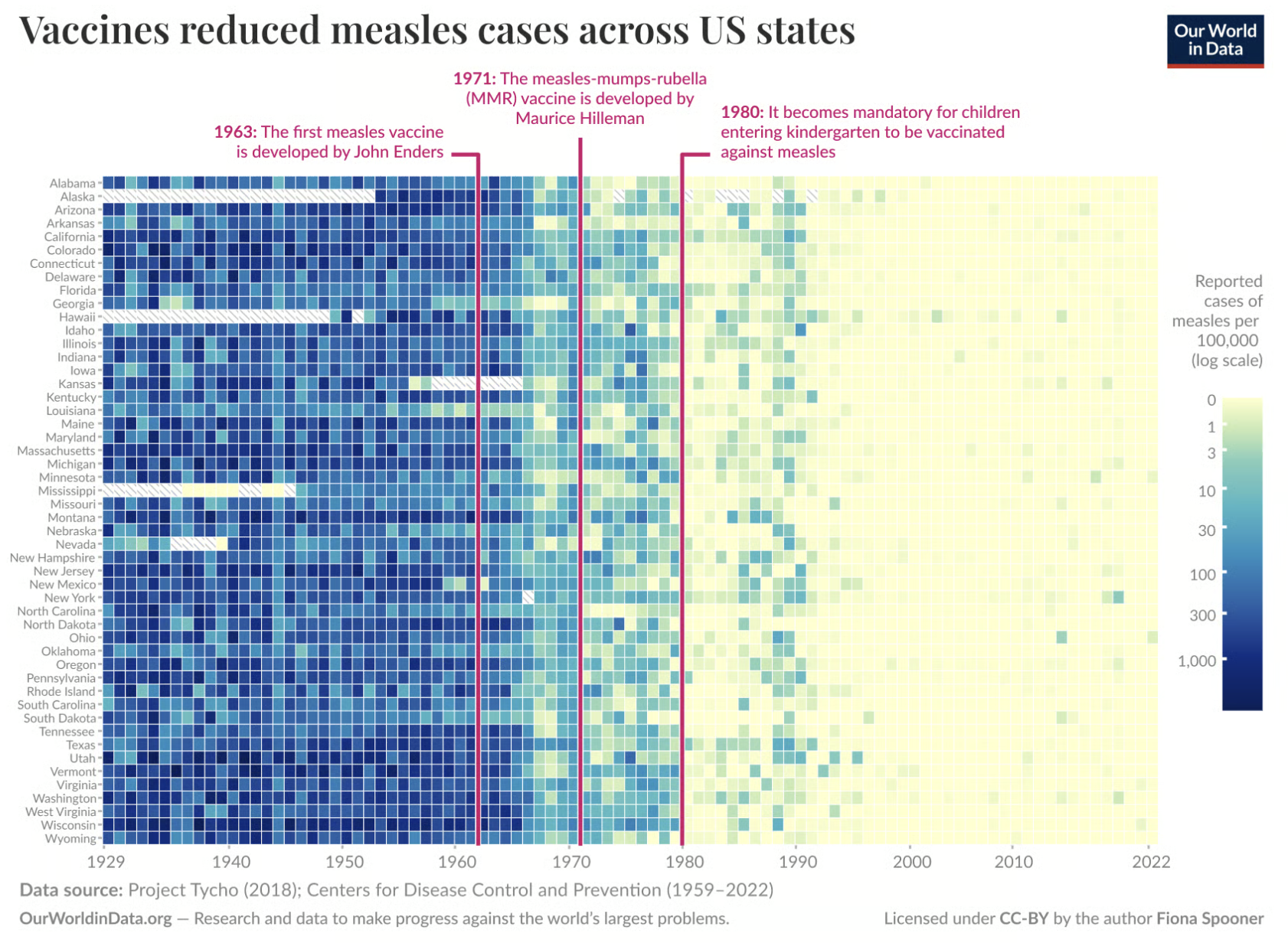
Just 60 years ago, measles used to be an extremely prevalent disease, affecting millions of people in the United States alone, and killing millions worldwide annually. However, in 1963, the development of the early measles vaccine revolutionized the health industry, providing preventative treatment for measles. As visualized in the heat map below, the introduction of the vaccine combined with schools making it a requirement, measles was effectively eradicated in the U.S. population, clearly emphasizing the positive impact that vaccines have on public health.
|
|
|
|
Reposted from Our World in Data: Research and data to make progress against the world’s largest problems.
|
|
|
|
Data Science Updates is a collaborative effort of the Data Science Institute and Data Science Hub. This newsletter was originally created by the Data Science Hub and published as Hub Updates.
Use our submission form to send us your news, events, opportunities and data visualizations for future issues.
|
|
|
|
|