Data Science Updates is the University of Wisconsin-Madison's resource for news, training, events, and professional opportunities in data science, brought to you by the Data Science Institute, powered by American Family Insurance, and the Data Science Hub.
March 18, 2026
|
|
|
|
|
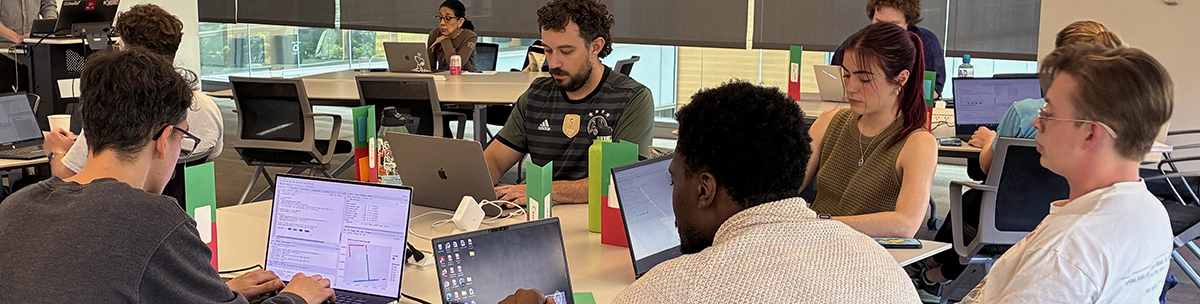
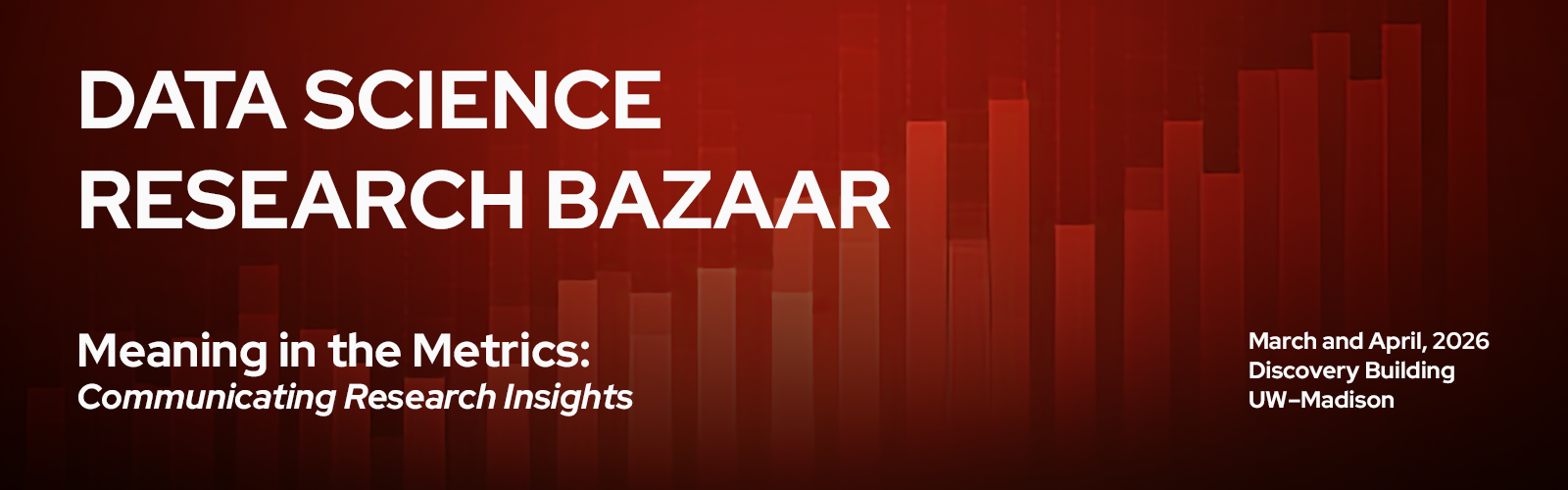
Are you interested in learning a new skill or joining a discussion about data science this spring? The Research Bazaar has you covered! Our Extended Bazaar event lineup includes trainings and focused discussions on topics ranging from creating dashboards and zines to experimental design and food access:
March 23 (register by March 20)
9-10:30: Applied data science for food access: Farm2Facts and FEAST
10:45-12:15: Data for the people: Zines and DIY publishing for researchers
2-5: Better data science communication through improv
April 6 (register by March 30)
9-12: Making dashboards in Python using Streamlit
1-4: Interactive dashboards in R with Shiny
April 16 (register by April 9)
10-11:30: Balancing competing metrics in applied AI
1-2:30: Four common experimental designs and how to use them
|
Join the Open Source Program Office and the UW-Research Software Engineering community on April 14, 3-4pm for a talk by Alyssa Travitz, senior research software engineer with OpenFreeEnergy. Travitz will discuss the development of open-source tools with applications in pharmaceutical lead optimization. This is a great opportunity to learn about cutting-edge computational methods in molecular design, open-source scientific software, and how industry–academic collaboration is shaping modern drug discovery. This event will take place at the Discovery Building Orchard View Room and will be followed by a reception. Please RSVP by March 31.
|
|
|
|
March 25, 1:30 p.m. - 2:30 p.m; 3610 Morgridge Hall. Pytorch is a growing, popular software for machine-learning-based workflows. This training is aimed towards researchers who have experience running Pytorch but need to scale up their workflow from their local computers to larger computing systems. A CHTC account is recommended. Visit the event page for more details.
|
March 25, 9:30 a.m. - 4:30 p.m; Biotechnology Center. This workshop is aimed at researchers interested in using open source tools for analyzing Next Generation DNA Sequencing (NGS) data. After learning essential techniques of the Linux operating system with the bash shell in the Linux Basics workshop, students will apply these newly acquired skills and identify single nucleotide polymorphisms (SNPs) from NGS data using Linux command-line driven open source software, and they will explore the results using graphical visualization tools.
|
March 30, 9:30 a.m. - 4:30 p.m; Biotechnology Center. The workshops will focus on introducing researchers to the principles behind RNA-Seq analysis and will provide a hands-on introduction to software and analysis pipelines for RNA-Seq including Tuxedo Suite. This workshop is aimed at teaching the computational process that takes the raw data all the way through the high-level analysis. We will focus on advanced analysis using a Linux command-line environment to run open-source RNA-Seq software in this all-day workshop with lecture and hands-on exercises. The morning session has more “hand holding” and the afternoon session provides time for applying what was learned.
|
May 6, 9:00 a.m. - 11:00 a.m.; 1145 Discovery Building. Machine Learning (ML) + Coffee is a monthly meetup for the UW community to discuss ongoing ML or artificial intelligence projects, share ideas, and find new tools and approaches. ML + Coffee offers a supportive, casual environment across a broad variety of departments. Coffee is provided to keep the ideas flowing.
|
May 26-29; Morgridge Hall. The Digital Investigations Bootcamp is the first intensive, hands-on OSINT training program in the Midwest designed specifically for data scientists, journalists, OSINT practitioners, and researchers. Hosted by the Public Tech Media Lab, participants will acquire immediately applicable skills in chronolocation and geolocation, advanced search techniques, social media analysis and verification, safety and security practices, and ethical protocols. All sessions will take place at the WARF Centennial Seminar Hub at Morgridge Hall in Madison. Register soon at the Digital Investigations Bootcamp website.
|
|
|
|
Have questions about anything data science-related? Come see the Data Science Hub facilitators at Coding Meetup on Tuesdays and Thursdays from 2:30-4:30 p.m. CT. To join Coding Meetup, join data-science-hubgroup.slack.com.
|
|
|
|
Apply by March 20, UW-Madison. We are seeking applicants for the 2026 Open Source Grid (OSG) School, to be held July 13-17. Apply now and learn to harness large-scale computing for research. The OSG School teaches you how to use high-throughput computing effectively and get a research workload up and running. Past participants have come from physics, chemistry, engineering, math, bio and life sciences, earth sciences, agricultural and animal sciences, social sciences, economics, medicine, and more. Learn more and apply at the OSG School website.
|
March 25, 12:30 p.m. - 1:30 p.m.; Orchard View Room, Wisconsin Institute for Discovery, and Zoom. This seminar will include three student presentations on research projects supported by American Family Insurance: Safer Driving Through Optimized Telematics-Based Feedback, Vision-Language Model for Driving Environment Risk Analysis, and Simulating Hurricane Migration: A Digital Twin Approach. Join the SILO email list to RSVP for the in-person seminar or get the Zoom link.
|
March 30 - April 2, 9:00 a.m. - 1:00 p.m.; Wisconsin Institute for Discovery. Join the Data Science Hub for their pilot workshop Building Better Research Software in R. They will be teaching next steps for doing software development as a researcher, after learning R, the Unix shell, and git/GitHub. This workshop includes how to create a project, use a reproducible environment, test your software, work with collaborators, write documentation, and more!
|
CGSI Genomic Seminar Series: Feng Yue
April 2, 1:30 p.m. - 2:30 p.m.; 1111 Genetics Biotechnology Center. Join the Center for Genomic Science Innovation (CGSI) in welcoming Feng Yue from Northwestern for their seminar titled Epigenetic and 3D genome alteration in human cancer.
|
April 10, 12:00 p.m. - 1:00 p.m.; 250 Science Hall. Join the Geospatial Data Science Speaker Series for it's latest installment, hosted by the GeoDS Lab at UW-Madison and co-sponsored by the UW-Madison Data Science Institute. Hear guest Speaker Dr. Di Zhu, assistant professor at the University of Minnesota, Twin Cities. This talk will discuss how GeoAI and network-informed spatial analytics and modeling can reveal complex spatiotemporal phenomena in cities.
|
|
|
|
|
|
|
DATA VISUALIZATION OF THE WEEK
|
|
|
|
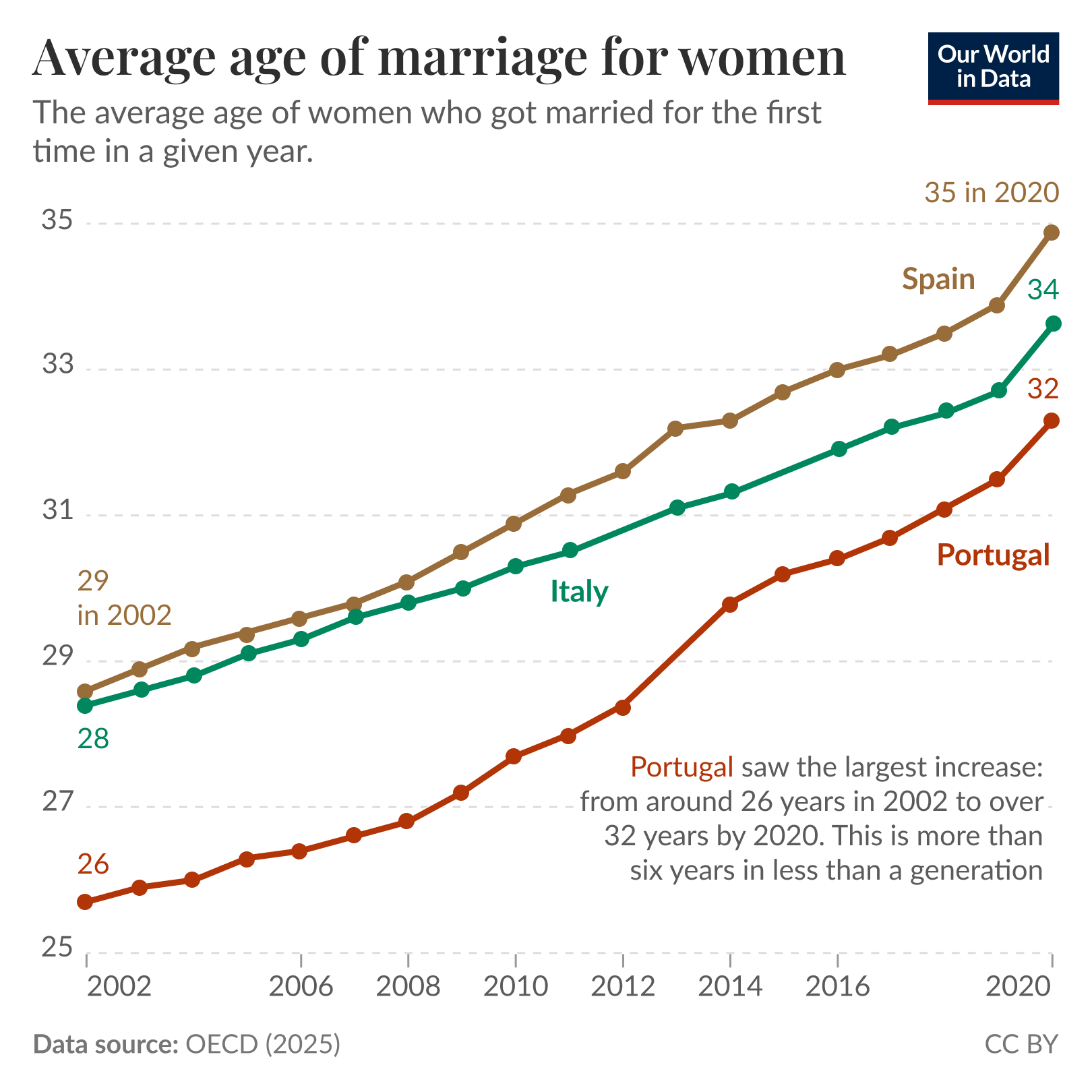
Over the past century, global modernization has greatly changed the roles and opportunities available to women. Including being able to vote and own their own home, these changes have afforded women more independence than previously possible. In coordination with the complicated social and political climate, this has led to increased age at marriage, particularly for women. Since the beginning of the 21st century, the average age at marriage has increased nearly six years in Portugal, Italy, and Spain. Now, these European women are getting married in their early-to-mid thirties as opposed to their late twenties. In the future, there is potential for this trend to continue, leading to later marriages overall.
|
|
|
|
Reposted from Our World in Data: Research and data to make progress against the world’s largest problems.
|
|
|
|
Data Science Updates is a collaborative effort of the Data Science Institute and Data Science Hub. This newsletter was originally created by the Data Science Hub and published as Hub Updates.
Use our submission form to send us your news, events, opportunities and data visualizations for future issues.
|
|
|
|
|