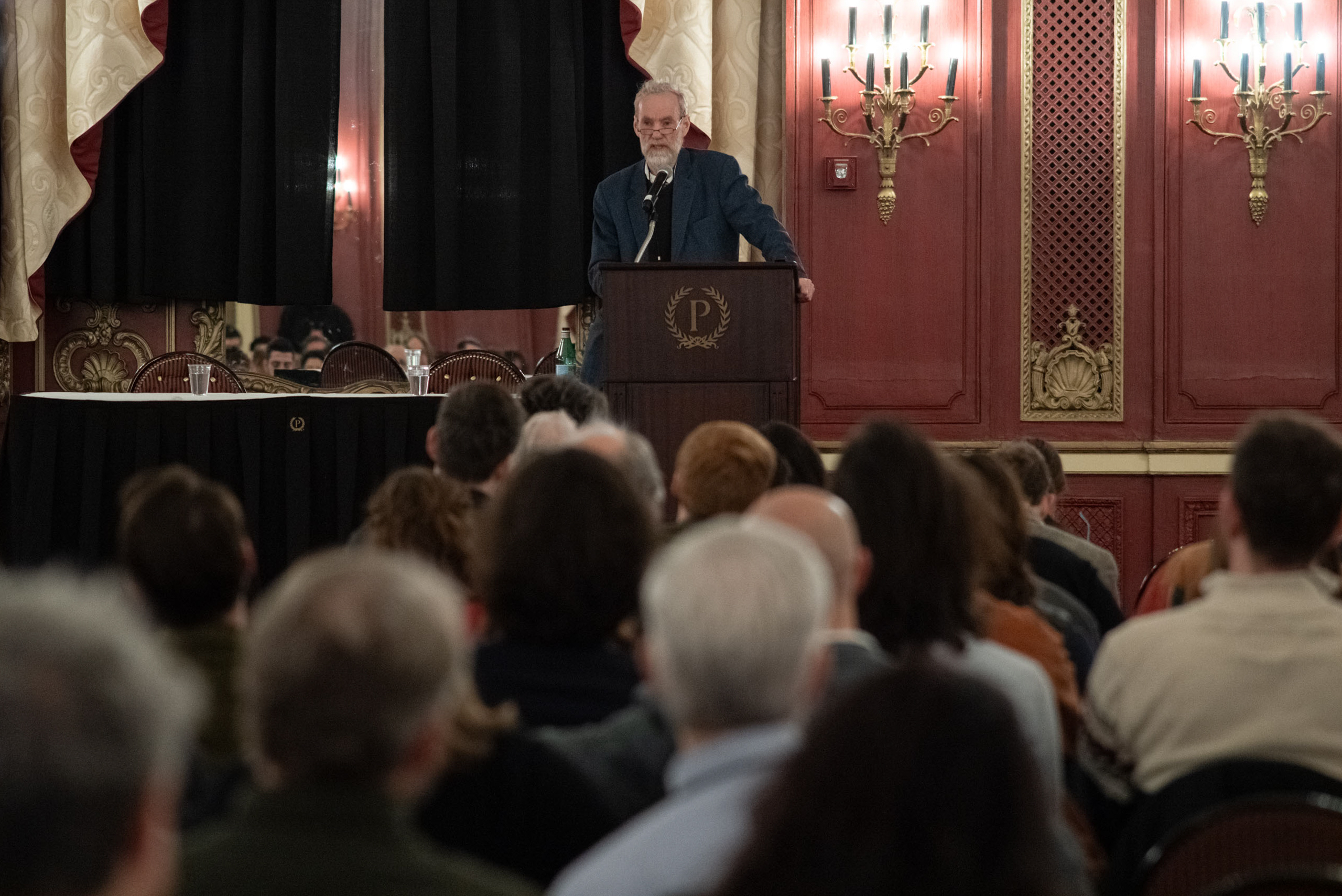
Photo Credit: American Philosophical Association, Central Division
Harry Brighouse elected President of the Central Division of the American Philosophical Association
by Rob Streiffer
A hearty congratulations to Professor Harry Brighouse (UW-Madison) for being elected to serve as the 2025-2026 president of the Central Division of the American Philosophical Association!
Harry is an expert in the philosophy of education, examining the policies and practices of educational institutions from the perspectives of political philosophy as well as normative and applied ethics. In February, Harry delivered the presidential address at the Central Division annual meeting, held in Chicago this year. In his address, he argued that undergraduate education in general as well as philosophy as a discipline have “the intellectual resources that enable us to contribute in a valuable and distinctive way” to make students better citizens, and that this should be one aim of an undergraduate education. In particular, a vital aspect of being a good citizen is being, in his terminology, deliberatively responsible. In a Rawlsian spirit, Harry argued that, when we try to use state power within a democracy to establish laws or policies that will bind others, being deliberatively responsible means being willing and able to “take their interests, as well as our own, into account, to offer them reasons and justification for our choices in terms that they can hear and consider, and to consider the reasons and justifications they offer for theirs.”
Recent survey research documents a growing lack of mutual respect and tolerance between democrats and republicans along such measures as feeling disturbed were a child of yours to marry a member of the opposing political party or believing that members of the opposing political party are immoral, dishonest, or close-minded. But Harry believes that several aspects of undergraduate education can be recruited to help mitigate these problems. For many students, college provides a more diverse intellectual and political environment than the extremely segregated neighborhoods from which they came. General education and other breadth requirements can direct students to classes that build the skills essential to deliberative responsibility. He points to curricular reform championed by Deborah Satz at Stanford, that resulted in a new “Civic, Liberal and Global Education” requirement. Satz describes the requirement in the following words:
By structuring its curriculum around important topics rather than canonical texts, and by focusing on the cultivation of democratic skills such as listening, reasonableness and humility, we have sought to steer clear of the cultural issues that doomed Western Civ. The new requirement was approved by our faculty senate in May 2020 without a single dissenting vote. Called Civic, Liberal and Global Education, it includes a course on citizenship in the 21st century. Delivered in a small discussion-seminar format, this course provides students with the skills, training and perspectives for engaging in meaningful ways with others, especially when they disagree.
UW-Madison philosophy Ph. D. graduate Aaron Yarmel has led the development of a “Civil Discourse for Citizenship” program at Ohio State University. The program understands civil discourse as
the practice of deliberating about matters of public concern with others in a way that seeks to expand knowledge and promote understanding…. [It] aims to develop mutual respect, build civic trust, and identify common ground on matters of public concern…. [C]ivil discourse is the aspect of democratic citizenship that universities are designed to promote.
At UW-Madison, Harry has helped with several initiatives to build and strengthen our students’ deliberative responsibility, including the Deliberation Dinners, an arm of The Discussion Project. The Discussion Project offers instruction for instructors on building community, facilitating whole group interactions, creating equitable and inclusive classrooms conducive to high quality discussion, and implementing strategies to develop students’ discussion skills.
Along with fellow philosophy faculty Aja Watkins and Alex Meehan, and with David O’Brien (another UW-Madison philosophy Ph. D. graduate now in UW-Madison’s Department of Educational Policy Studies), and many others, Harry has been an active participant in “Deliberation Dinners”. These events are specifically targeted to give students practice with many of the skills constitutive of deliberative responsibility. They bring together some 350 students to discuss, with the help of a trained faculty facilitator, controversial political issues such as gun control, immigration policy, school vouchers, and abortion law. The students are provided ahead of time with papers written specifically for the Deliberation Dinners to provide context and to charitably present arguments for and against relevant policy alternatives. In his address, Harry argued that some classrooms can and should also be designed to foster deliberative responsibility by having the following characteristics:
Professors would be careful to ensure that the full range of relevant and reasonable perspectives would come out in class discussions.
All the students, including those who are reluctant, would be induced to speak
Students would feel able to think (carefully and maybe cautiously) out loud, confident that their classmates and teachers would impute good intentions and that they would be interpreted charitably by all parties and not held accountable for imperfections in their phrasing.
Nobody would be hypervigilant for deviation from some accepted set of commitments, and everybody would know that nobody else was going to be hypervigilant eventually as if a pact had been signed.
Students would be tolerant of one another, so that errors, including moral errors, would be easily forgiven. Teachers would be skilled at correcting errors, including moral errors, without shaming perpetrators or deterring future student speech.
And, Harry noted, “Philosophy has quite deeply embedded norms around instruction of controversial issues that are much better suited to fostering deliberative responsibility than many other disciplines, and one reason to give this talk to APA members is that I want you to consider how our discipline can play a leadership role in this regard.”
Harry’s numerous books in the philosophy of education include: Debating Education: Is There a Role for Markets (with David Schmidtz); On Education; School Choice and Social Justice; Educational Goods: Values and Evidence in Decision-Making (with Helen Ladd, Susanna Loeb, and Adam Swift); Educational Equality (with James Tooley and Kenneth Rowe); and The Aims of Higher Education: Problems of Morality and Justice (with Michael McPherson).
Harry joins a long and prestigious line of other UW-Madison philosophers who have been elected as Central Division president, including Russ Shafer-Landau (2020-2021), Steve Nadler (2013-2014), Claudia Card (2010-2011), Elliott Sober (1989-1999), Marcus Singer (1985-1986), Fred Dretske (1984-1985), and Max Otto (1929-1930).
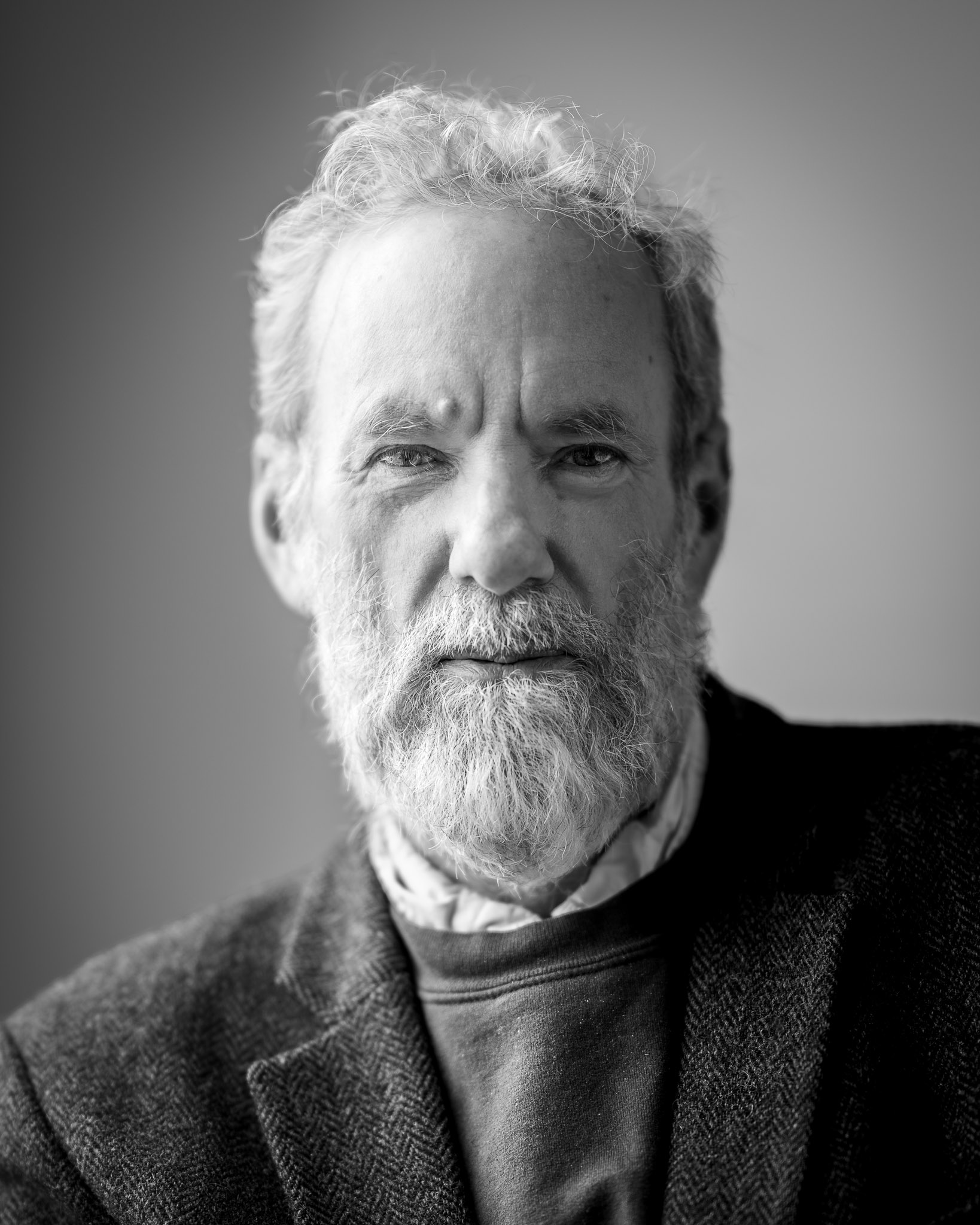
Harry is the Mildred Fish-Harnack Professor of Philosophy of Education, Professor of Philosophy, Carol Dickson-Bascom Professor of the Humanities, and Affiliate Professor of Educational Policy Studies at the University of Wisconsin—Madison. He was elected to the American Academy for the Arts and Sciences in 2025. You can read more about his work on his webpage at https://sites.google.com/site/harrybrighouse/.
Photo Credit: Rob Streiffer