|
|
|
Winter Salt Week Addresses A Forever Pollutant
|
|
|
|
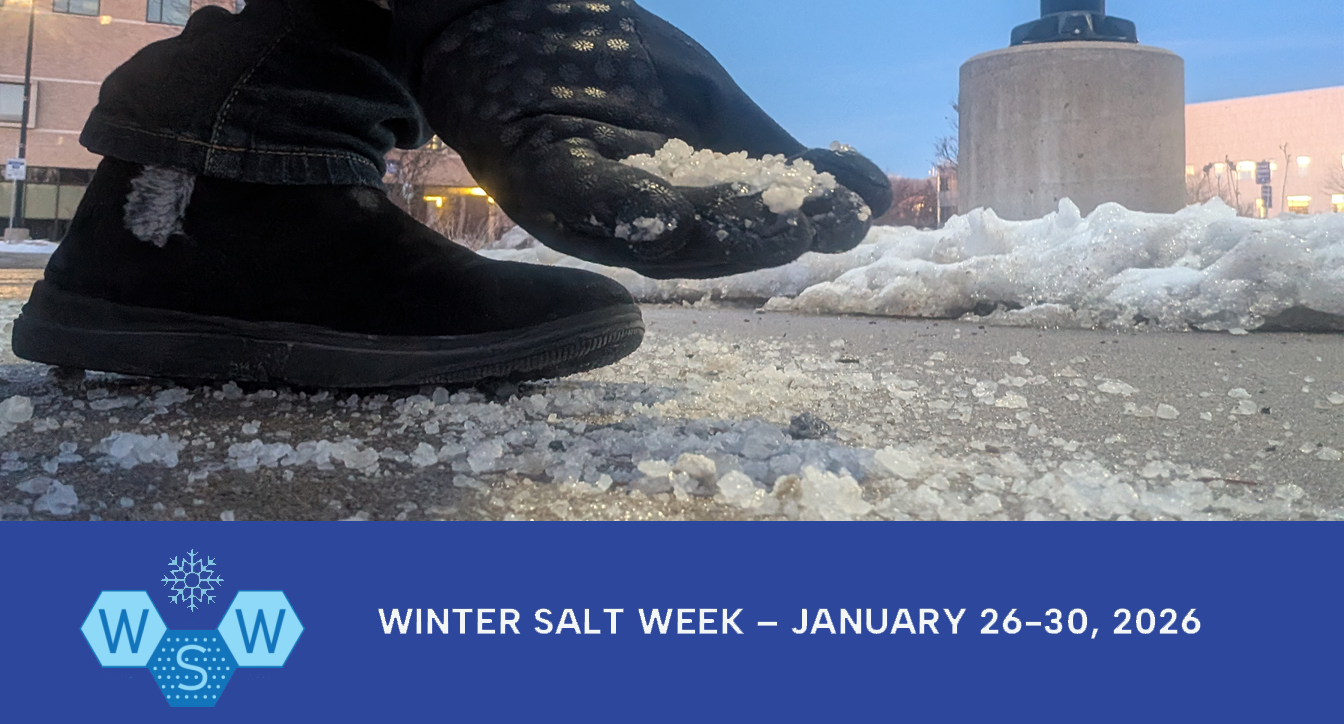
After Road Salt Melts Snow, It Degrades Freshwater
Winter Salt Week - January 26-30, 2026
Every winter, tons of salt are spread on roads, parking lots, and sidewalks to keep us safe. But once the snow melts, that salt doesn’t disappear—it washes into our lakes, streams, and groundwater. Rising salt levels corrode infrastructure, stress wildlife, and pose risks to our drinking water supplies. Just a teaspoon of salt permanently pollutes five gallons of water.
Do your part to help protect our shared freshwater resources and make a pledge to follow the "4 S's" this winter: Shovel, Scatter, Switch, Sweep:
- Shovel (or snow blow) and sweep as much snow as possible before spreading salt.
- If needed, Scatter salt so there is space in between the grains (no piles!).
- Switch from salt to sand (or a treated de-icer) if the temperature is under 15℉.
- Sweep up excess salt after the ice has melted.
Winter Salt Week will feature daily live streams from ecologists, winter maintenance contractors, and activists from across the United States. Tune in to learn more about the environmental toll of de-icers, private industry successes, engineering solutions, smart salting contracts, local monitoring efforts, and how individuals can get involved!
|
|
|
|
|
Bald Eagles: A Sentinel Species in Wisconsin
|
|
|
|
|
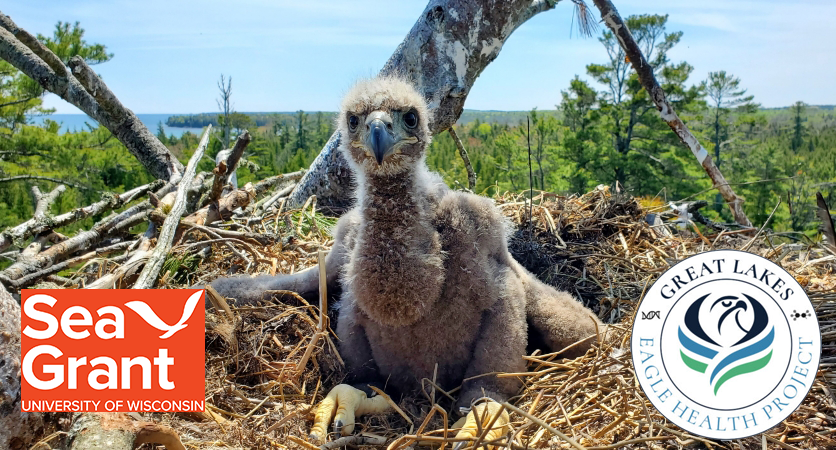
This eaglet, found in a nest along the Lake Superior shore, was included in the Great Lakes Eagle Health Project. Photo by Dan Goltz
|
|
|
|
What are eagles telling us about our environment, and how does that data get collected?
Because of the efforts from federal and state agencies, along with dedicated nonprofits and volunteers, eagles were taken off Wisconsin's Endangered and Threatened Species list, but they remain protected by state law as a species of Special Concern. Our friends at Wisconsin Sea Grant recently shared an article with links to some great videos about how and why researching our national bird is important. Aptly named a "sentinel species," these beautiful, large raptors can give us a heads-up about toxins in our environment. Since 1990, the Great Lakes Eagle Health Project has tracked reproduction success and contaminant levels in eagles across Wisconsin, especially along the Great Lakes shoreline. The project brings together federal, state, tribal, and academic partners to test eagles for a variety of pollutants, like heavy metals, PCBs, and most-recently PFAS, and investigate how they’re affecting eagle health.
You can help the Wisconsin Department of Natural Resources (DNR) and other state and federal partner efforts!
- Report active nest locations to the DNR (from a distance!)
- Avoid bald eagle nests during the breeding season (February 15-August 1).
- Discourage illegal and unethical shooting of eagles.
- If you are a hunter or angler, use lead-free ammunition and tackle.
Here are some opportunities to interact with Bald Eagles in a responsible way:
|
|
|
|
|
Phenology Fun Fact
|
|
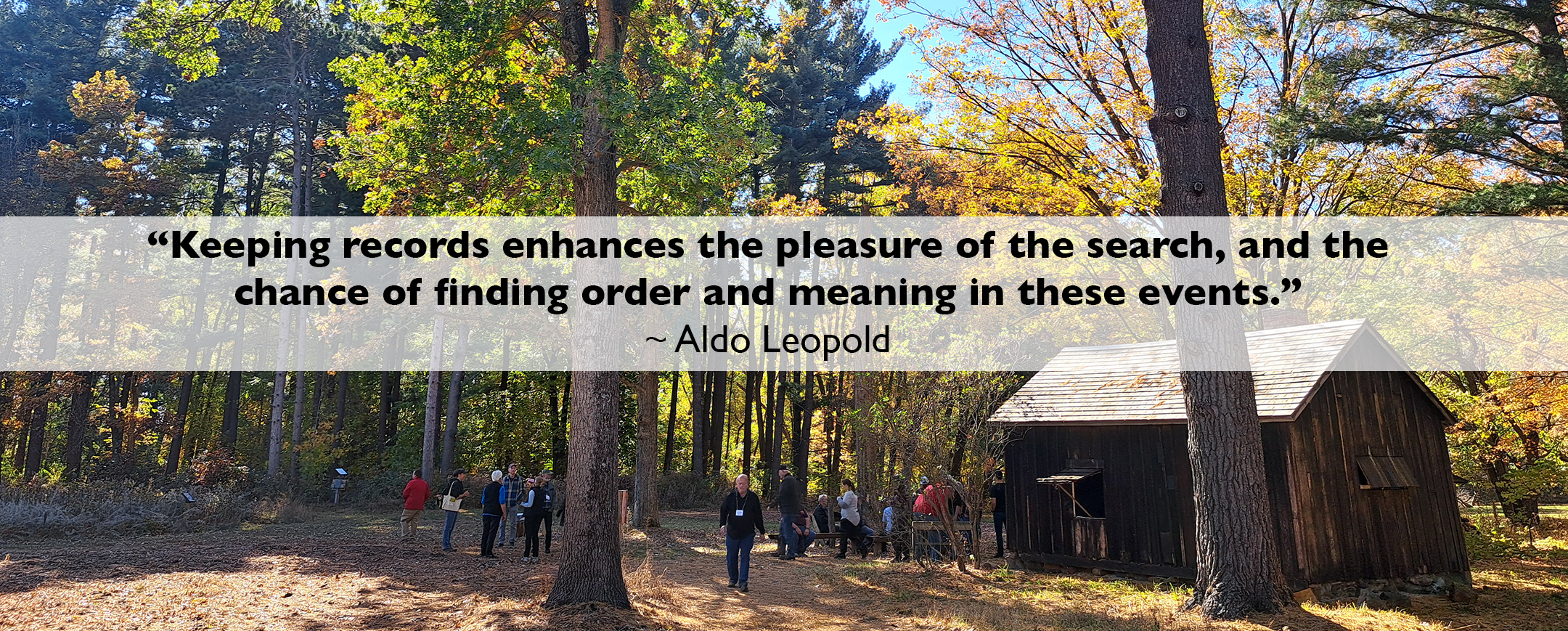
Recording detailed phenology observations at the Shack in Baraboo was a Leopold family tradition. Shown here are Wisconsin Lake Leaders, Crew 15, at their final session at the Shack. Photo by Extension Lakes.
|
Phenology: Enjoying the Wonder and Finding Meaning
We hope you've enjoyed the Phenology Fun Facts over the last year in this publication (pssst, warm winter days when the snow is melting is a good time to look for snow fleas). In Wisconsin, where life revolves around lakes and rivers, phenology helps us understand how changing seasons and weather affect our local beings. Taking notice and recording the world around us is exciting (hearing that first loon on the lake), important (witnessing spring fish spawning), and sometimes surprising (early ice-out).
How do you relate to nature’s calendar? Maybe one of your intentions for 2026 is to take notice of (and record) the wonder around you. Nature is a great teacher.
“In the end, we will conserve only what we love; we will love only what we understand and we will understand only what we are taught.”
~ Baba Dioum
Here are some great phenology resources:
|
|
|
|
|
|
Program Updates from Extension Lakes
|
|
|
|
Our Lakes, Our Responsibility
|
|
|
|
|
|
Clean Boats, Clean Waters (CBCW) Watercraft Inspection Program
Congratulations to this year's Clean Boats, Clean Waters (CBCW) grant recipients! Over 150 organizations received a CBCW grant from the Department of Natural Resources to support local boater and angler outreach efforts at boat landings in 2026. Thank you for taking action and helping share the AIS prevention steps! To learn more about CBCW watercraft inspection efforts, visit the CBCW website. Find out how to apply for a CBCW grant by visiting the DNR Surface Water Grants webpage and selecting the CBCW tab.
|
|
|
|
|
|
What are Fish Sticks?
Did you know?
Studies have shown there are more logs in undeveloped lakes than in lakes that have cabins/houses [Marburg et al (2006), Christensen et al (1996)]. What's a log? A tree that has fallen into the lake and provides feeding, breeding, and nesting areas for all sorts of critters (think fish, turtles, songbirds). The loss of logs in lakes with development is likely to affect lake habitat for centuries. This negative impact will last longer if shoreline trees are removed and not replanted.
Fish Sticks can help! This Healthy Lakes & Rivers best practice includes a cluster of 3-5 whole trees that come from upland areas and are anchored to the shoreline. Fish Sticks can also prevent bank erosion which protects lakeshore properties and the lake.
Winter is the perfect time to install Fish Sticks and funding is available!
|
|
|
|
|
|
Wisconsin Lake Leaders - Accepting Nominations
The Wisconsin Lake Leaders Institute equips passionate lake advocates with the leadership skills, communication tools, and collaborative mindset needed to protect and care for Wisconsin’s lakes, now and for future generations.
Nomination deadline: February 1
|
|
|
|
|
|
Your Opinion Matters: Tell us what you think about Lake Tides
We want your feedback! Even if you do not receive our Lake Tides newsletter, we still want to hear from you. Please take our anonymous survey, which takes just 8-10 minutes, by clicking the button below. Your input will help guide future articles in both Lake Tides and Lake Ripples.
|
|
|
|
|
|
|
|
|
|
|
Upcoming Events
|
Free Fishing Weekend!
January 17-18, 2026
During Free Fishing Weekend, anglers of all ages can wet a line in any Wisconsin waters open to fishing without a fishing license, trout stamp or salmon stamp.
|
|
|
Winter Salt Week
January 26-30, 2026
|
|
|
|
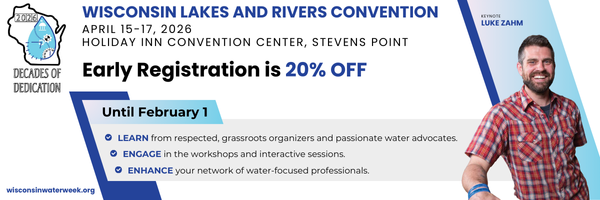
Register now for the Wisconsin Lakes and Rivers Convention
Early-bird Deadline: February 1
Join scientists, water management specialists, educators, students, waterfront property owners, and other water-forward thinkers this spring, at the Wisconsin Lakes and Rivers Convention in Stevens Point, April 15-17, to share insights, connections, and inspiration! Early-bird pricing ends February 1! We will be looking back at the “decades of dedication” devoted to solving Wisconsin’s wicked water problems and protecting our amazing lakes and rivers.
|
|
|
Frozen Assets Festival
February 7-8, 2026 | Madison
Join Clean Lakes Alliance for some community fun on and around Lake Mendota!
|
|
|
Reimagining Conservation: Belonging, Justice, and the Future of the Land Ethic
February 12, 2026 | 7:00 PM | Free webinar
Aldo Leopold Foundation's Land Ethic Live! Where Ethics Meet Earth presents Carolyn Finny, who invites us to reconsider conservation at a pivotal moment, challenging us to imagine a land ethic rooted in justice, inclusion, and shared responsibility for the world we inherit and shape together.
|
|
|
Winter Workshop - Wisconsin Association for Environmental Education
February 13-15, 2026 | Stevens Point
Attention all educators! Bryn Lottig, adventure educator and author, is Saturday's keynote and will share how we can use outdoor and environmental education as a medium to develop social and emotional skills in learners of all ages. Her best selling book, No Child Left Inside will be available for purchase.
|
|
|
Wisconsin Wetland Association's Wetland Science Conference
February 24-26, 2026 | Baraboo/Wisconsin Dells
Register before January 23rd for early bird discounts. Workshops and field trips are first-come, first-served, so register early to reserve your spot!
|
|
|
|
|
|
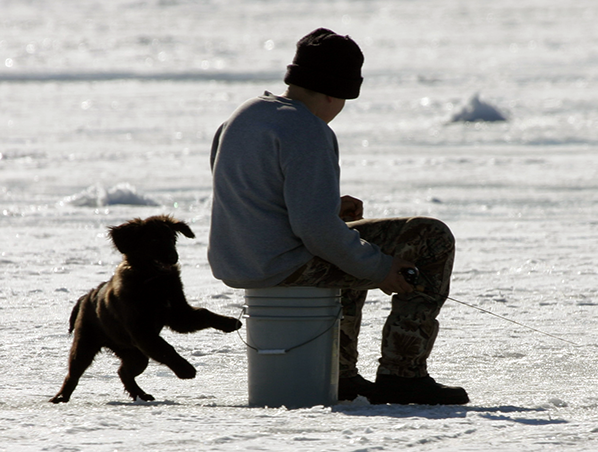
A dose of reel-y cold humor:
How thick is the ice?
All the way to the bottom of the hole!
|
|
|
|
Did this come to you from a friend? Subscribe HERE.
|
|
|
|
|