|
|
|
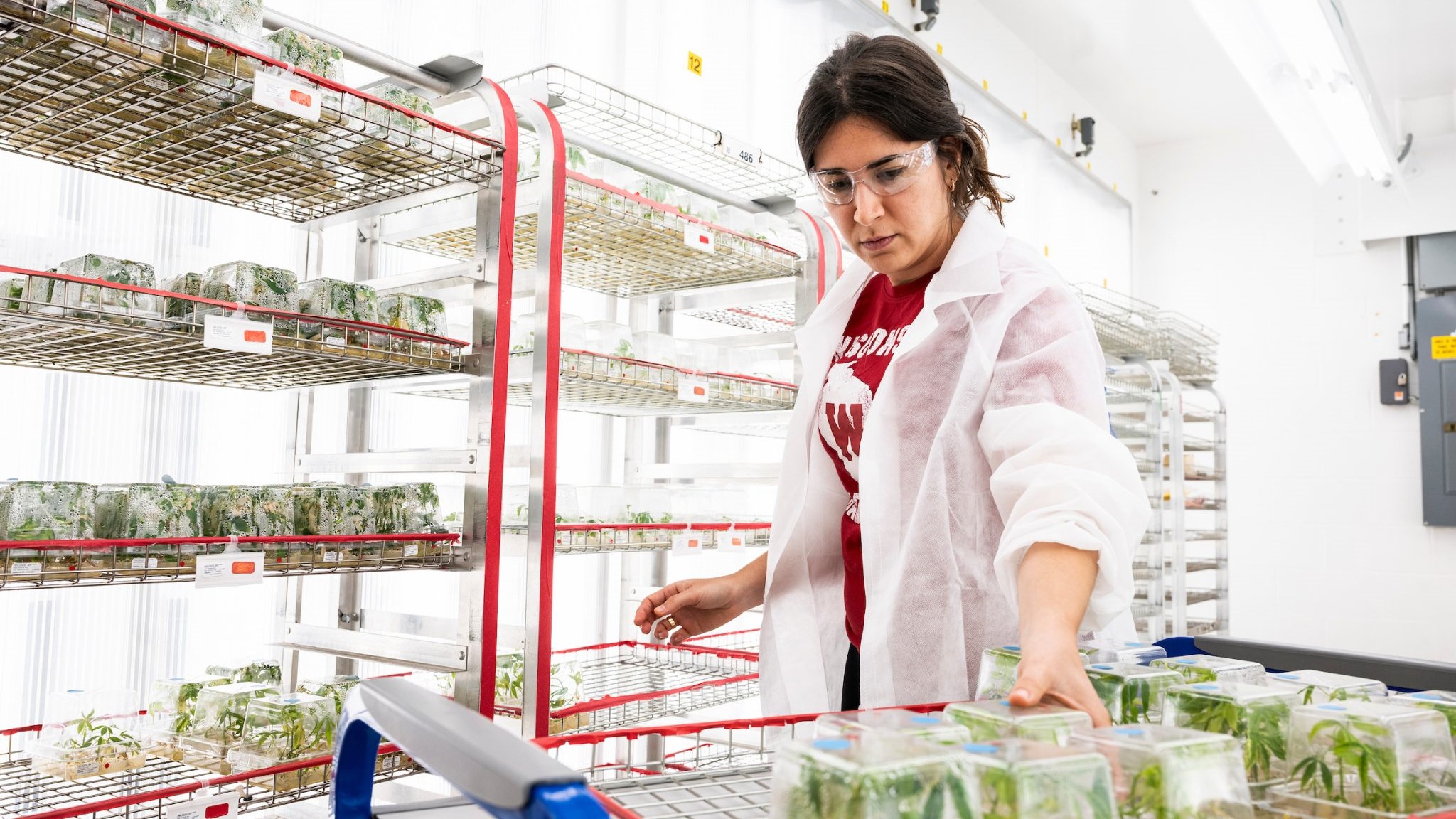
The Wisconsin Crop Innovation Center (WCIC) began in early 2017, and has grown significantly since. Shawn Kaeppler, a professor in plant and agroecosystem sciences, serves as WCIC's director. The center not only works with researchers at UW-Madison, but also scientists across 35 states and 22 countries. WCIC's discoveries have changed the agricultural industry such as developing the first gene-edited cannabis variety in the world – Badger G Hemp – which is completely THC free. Learn more about WCIC's developments.
|
|
|
|
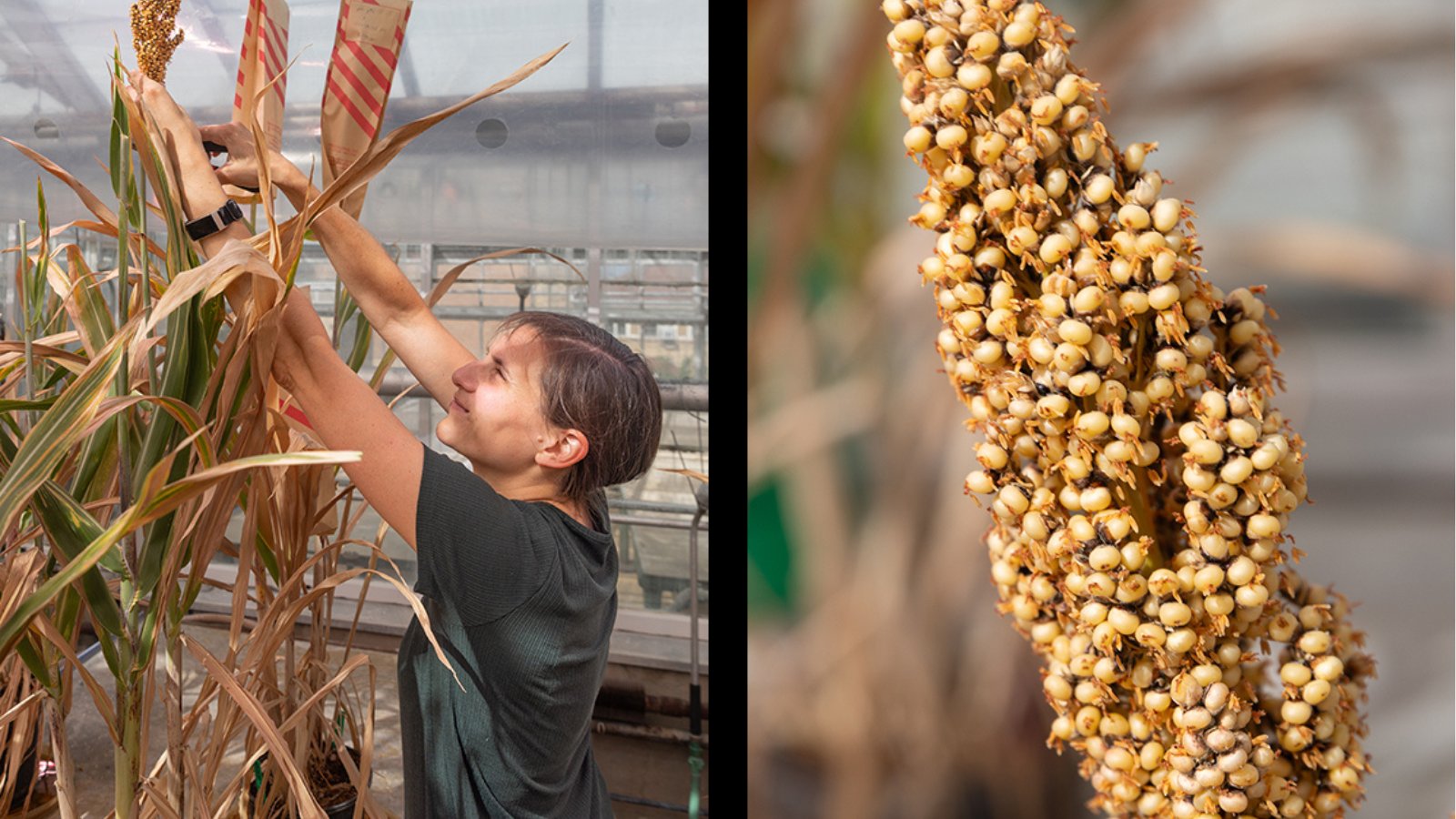
Rebecca Smith, an assistant professor in plant and agroecosystem sciences, researches how to make biofuel production more efficient and how to reduce methane from dairy cows. Both initatives center on lignin, a chain of molecules bound to the sugars in the plant cell wall. Lignin acts as a barrier to energy stores, which impacts methane and biofuel production. Smith researches how to grow plants with less lignin without hindering crop growth and development. Read more about Smith's research.
|
|
|
|
|
|
Over the past two years, the Department of Plant and Agroecosystem Sciences launched two new majors: agroecology and plant science and technology. These majors became possible when the Departments of Agronomy and Horticulture merged in 2023. After years of researching current and future industry needs, planning curriculum, and collaborating across areas of expertise, the faculty and instructional staff combined their academic programs to create the two new majors. Read more about the new majors.
|

|
|
Events
|
On select Saturdays, Allen Centennial Garden hosts a series of drop-in and sign-up workshops featuring dying clothes, creating watercolors with plants, flower pounding, and more. Explore the workshops.
|
|
|
Build Your Own Bouquet | Saturdays and Sundays May 16 to August 29
|
This field day at the Rhinelander Agricultural Research Station will feature a field wagon tour giving attendees a first-hand look at the station’s research in action. Speakers will share updates on UW–Madison potato breeding research with topics including remote sensing technology, managing potato insects, and plant pathology. Learn more.
|
Located at Arlington Research Station, this field day will feature field tours, updates on herbicide resistance and weed management, and information on organic crop field production and certification. Learn more and register.
|
This event at Arlington Research Station will feature tours and talks about the latest research in organic grains and forages, including reducing tillage, emerging crops, and soil health. Learn more and register.
|
The Ellison Lab will host a field day at Arlington Research Station covering topics such as industrial and high cannabinoid variety trials, pest and disease survey results, fertility/cover crop interaction studies, and more. Learn more and register.
|
Hear from UW–Madison grain agronomy, field crop pathology, weed management, soils, forage, and farm economics researchers on a half-day field-based tour of the latest ongoing trials at Arlington Research Station. Learn more.
|
At Arlington Research Station, this workshop will feature a full day of the latest weed management science, technology, and take-home-tips to improve weed control and profitability for ag service providers, farmers, agronomists, chemical applicators, and more. Learn more.
|
Join Allen Centennial Garden on Saturday, September 26 between 12 p.m. and 6 p.m. to celebrate an abundant and diverse harvest. The Garden will have live music, dancing, and storytelling alongside opportunities to learn about different harvest traditions from Dejope (Madison) and around the world. This event is free and open to the public. Learn more about the Harvest Festival.
|
|
|
|
|
|
|
Alumni Spotlights
|
|
|
|

|
Louis Aquino (right) carries the Graduate School flag at UW-Madison's spring commencement ceremony.
|
|
|
This spring, Louis Aquino was selected to serve as flag bearer for the Graduate School at UW-Madison's commencement ceremony. Aquino graduated with a master's degree in agroecology advised by Professor Nan Enstad. In his time at UW-Madison, Aquino participated in many local and international projects from helping farm to school programs in New York to collaborating with medical students in Colombia to create cosmetics from coffee waste. For his master’s thesis, Aquino partnered with an agroecological organization in Puerto Rico to conduct independent research. Read more about Aquino's work.
|
|
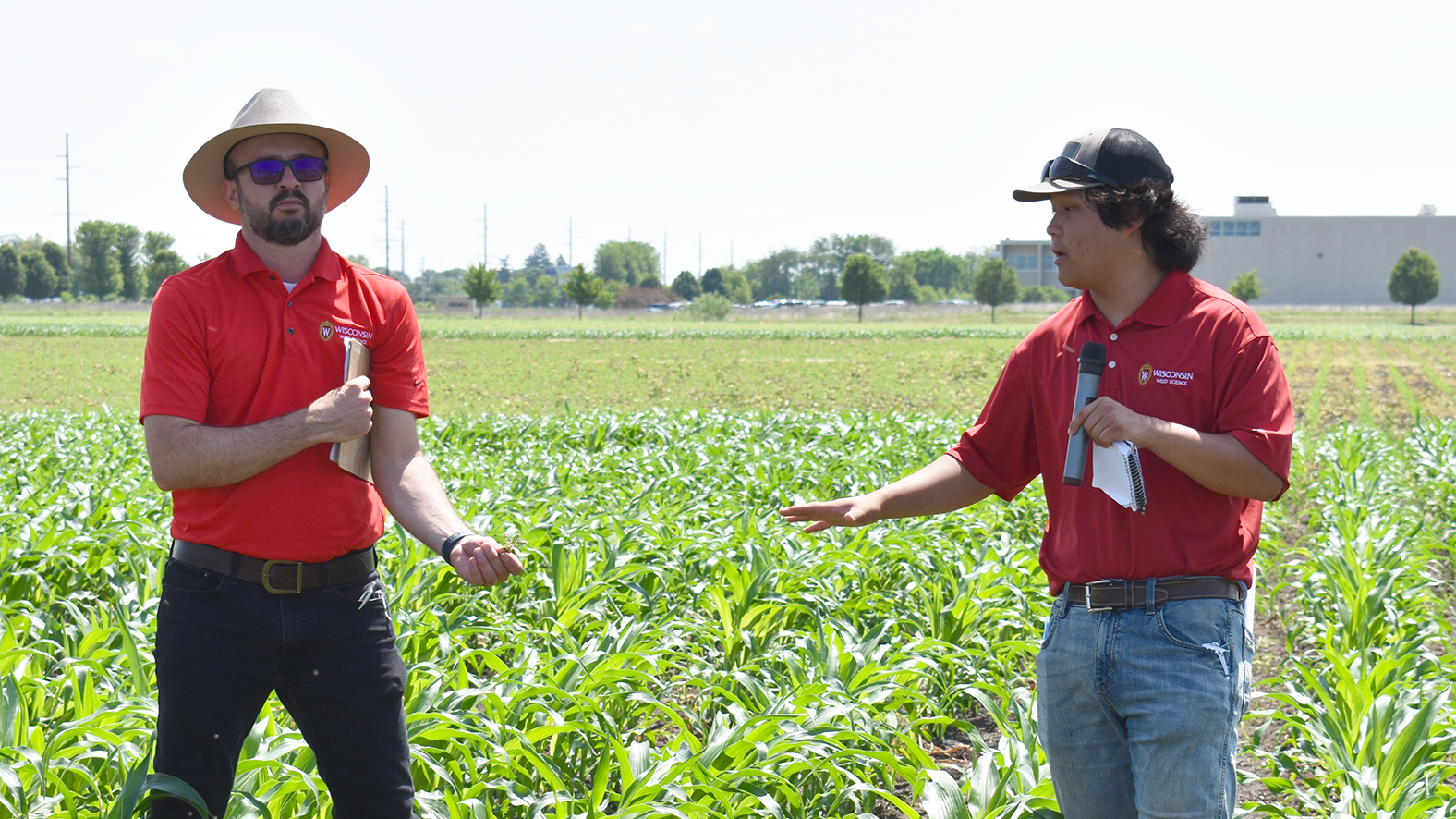
Rodrigo Werle (left) and Danny Zhu (right) present at a field day in Janesville, WI.
|
|
Danny Zhu, from UW to Purdue
|
Danny Zhu graduated this spring with a master's in agronomy. Zhu was a member of the WiscWeeds Lab led by Associate Professor Rodrigo Werle. Through his research, Zhu focused on finding solutions to challenging weed species that have the potential of reducing crop yields. Zhu worked on finding an alternative to the herbicide atrazine which is banned in some regions of Wisconsin. He combined older, lesser-known herbicides and modern techniques to create an effective weed management method. Zhu then shared his discovery with growers and industry stakeholders. Now, Zhu will pursue his PhD at Purdue University with Dr. Thomas Butts, a fellow UW-Madison alum, as his advisor.
|
|
|
|
|
|
|
Highlights
|
|
|
|
Sabeel Abuhakmeh receives O.N. Allen Agronomy Graduate Scholarship
|
|
|
Guilherme Chudzik selected Agronomy Outstanding Graduate Student
|
Derek Donnelly receives Dwayne Rohweder Forage Extension Fellowship
|
|
|
Tainá Hebel da Silva receives Elwood & Lydia Brickbauer Research Scholarship
|
Bryce Himmelberg receives Elwood & Lydia Brickbauer Research Scholarship
|
|
|
Mark Kendall receives Elwood & Lydia Brickbauer Research Scholarship
|
Ophelia Tsai receives Elwood & Lydia Brickbauer Research Scholarship
|
Colin Van de Loo receives Dwayne Rohweder Forage Extension Fellowship
|
Rianne Wagner receives Elwood & Lydia Brickbauer Research Scholarship
|
|
|
|
|
|
|
|
|
Giving
|
|
|
|
Our department is very grateful for the generous support our alumni and donors have provided to our programs over many years. Your contributions help us provide a high-quality education for our students, recruit and retain hardworking staff and faculty, and research solutions to important challenges in agriculture.
If you would like to support us, you may make a donation directly through the UW Foundation.
|
If you'd like to learn more about giving opportunities or have other questions related to the UW Foundation, please contact Emily Vaillancourt by email at emily.vaillancourt@supportuw.org or by phone at 608-308-5336.
|
|
|
|
|