|
Dear friend,
Last night’s full moon brought us the Picking Blueberries Moon, known to the Anishinaabeg peoples of northern Wisconsin as Miin-giizis / Miinikewi-giizis, which marks the sweet arrival of wild berries ripening across the landscape. Despite what surrounds us in this moment—the searing impacts of climate change manifesting in wildfire smoke that covered Wisconsin two weeks ago; tornadoes earlier this week; and the violence of structural racism and systemic oppression as demonstrated by the killing of Corey Ruiz by Madison police (you can find Loka’s statement here) —we at Loka are holding to what the Earth asks of us in this time.
The act of berry gathering is a quiet reminder of the unconditional compassion the Earth offers us. Equally, each of us belongs on this shared planet; equally, we are meant to share the abundance she provides. Given how heavy the times may feel, we urge our community to slow down, create and practice collective wellness, put in effort that is sustainable, and take only what we truly need—leaving enough for others and the renewal of next year’s harvest.
This delicate balance between community wellbeing and individual care, gratitude and restraint, and ecological harmony and human consumption, echoes a theme in our faith leader spotlight for this month’s newsletter. We sat down with Religious Director Hafiz Muhammad Shafique at Masjid Al-Qur'an in Milwaukee to explore faith-based environmental stewardship, youth mentorship, and community challenges. We hope his insights offer a moment of reflection. Read on for this month's featured interview—enjoy!
|
|
|

|
Dekila Chungyalpa
Director, the Loka Initiative at the Center for Healthy Minds
University of Wisconsin–Madison
|
|
|
|
|
|
Spotlight Interview with Hafiz Muhammad Shafique, Religious Director, Masjid Al-Qu’ran
|
|
|
|
|
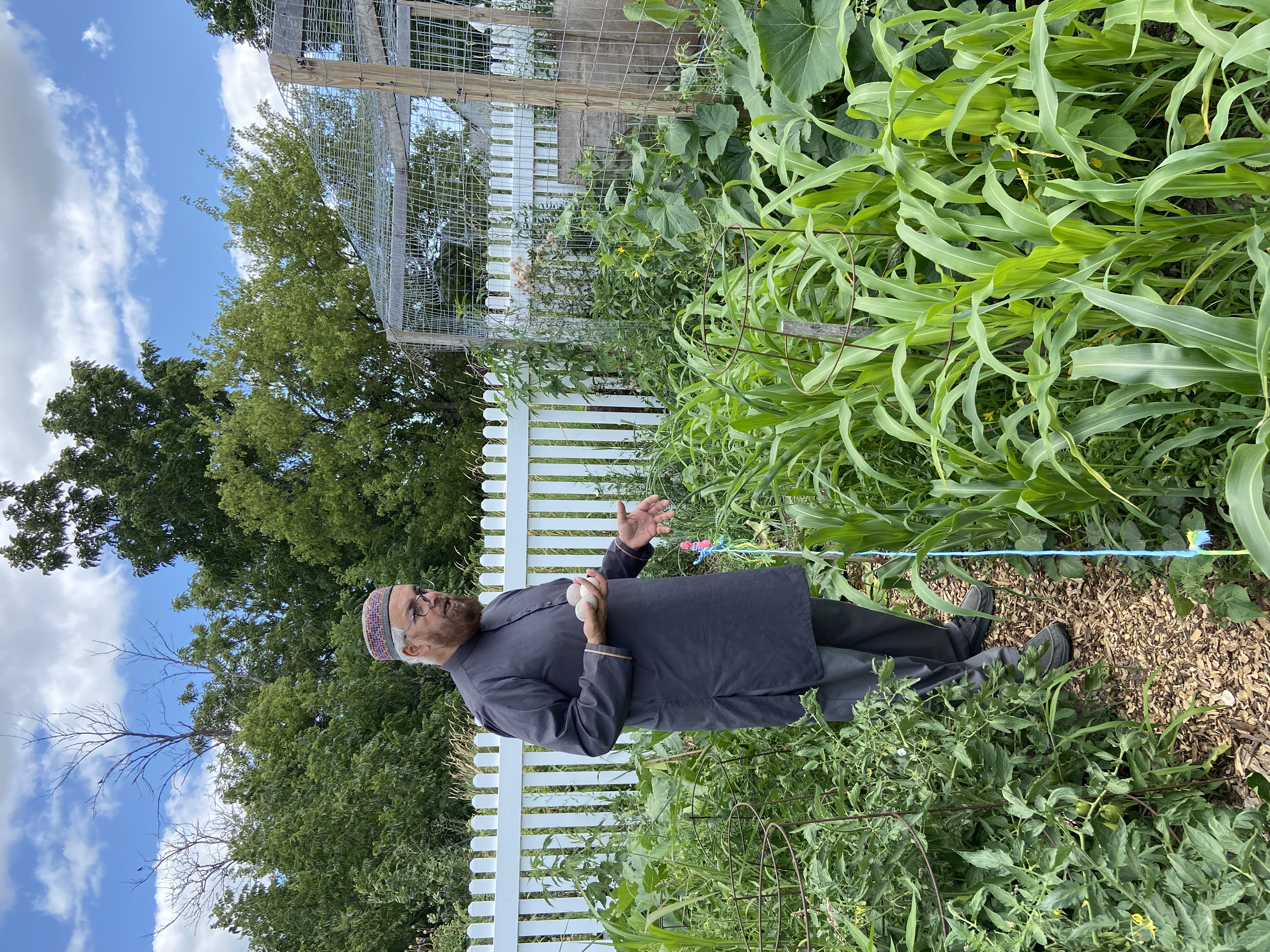
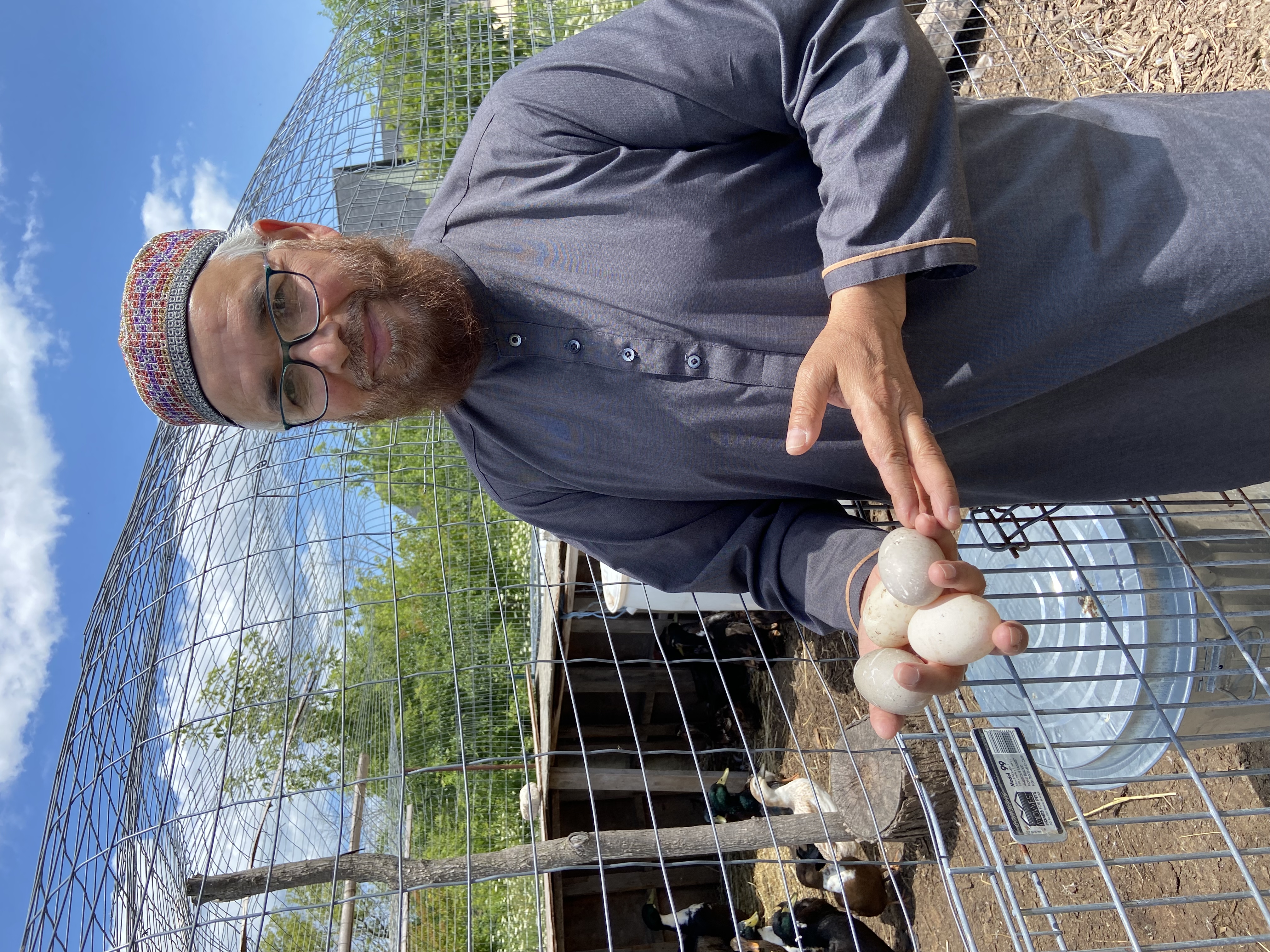
Masjid Al Qur’an religious director Hafiz Muhammad Shafiq displays duck eggs from the mosque’s grounds. Photo Credit: Mirtha Sosa Pacheco
|
Hafiz Muhammad Shafique started his work at Al Qur’an in 2000. He memorized the Quran at the age of 20 under the renowned hifz teacher Hafiz Khadim Hussain Sahib. He received his Bachelor’s degree from Punjab University in Lahore, Pakistan and his law degree from the Department of Islamic Shariah and Law at the International Islamic University in Islamabad, Pakistan. After graduation, Imam Shafique periodically lectured at various law colleges and went on to be appointed the Deputy Registrar of Mohiuddin Islamic University in Azad, Kashmir. Imam Shafique was a member of the founding cohort for the Loka Initiative’s Preparing Religious Environmental Plans (PREP) program—a capacity-building initiative that equips global faith leaders and religious practitioners with the tools, scientific insights, and frameworks to design community-specific climate action and environmental stewardship projects.
|
What issues are you working on as a faith and environmental leader that are the greatest priority for your community?
As we all know, there are a lot of challenges when it comes to the environment. But as a faith leader, or a person concerned about the environment, we cannot do everything.
The number one thing we are trying to do as a community is encourage our congregation and the people connected with the Muslim community to recycle, avoid wasting food and water, and use less of the things that cause harm to the environment. If there are other alternatives available for use, we should definitely go with the least wasteful.
Religiously, as Muslims, we know that wastage is not allowed. Almighty God tells us that He doesn't like wasteful people. He commanded us: don't waste. So that is one message we try to convey to the community and teach our students when they are here with us: make sure you are not wasting any food, water, or resources.
Working with our youth, we have weekend school every Sunday from September to May for Islamic Studies and Quran Studies, as well as after-school Quran classes three to four days a week. We also have year-round programs and workshops. We just had our summer camp last month for kids ages 4 to 13, offering hands-on educational activities, and we have activities for teenagers as well.
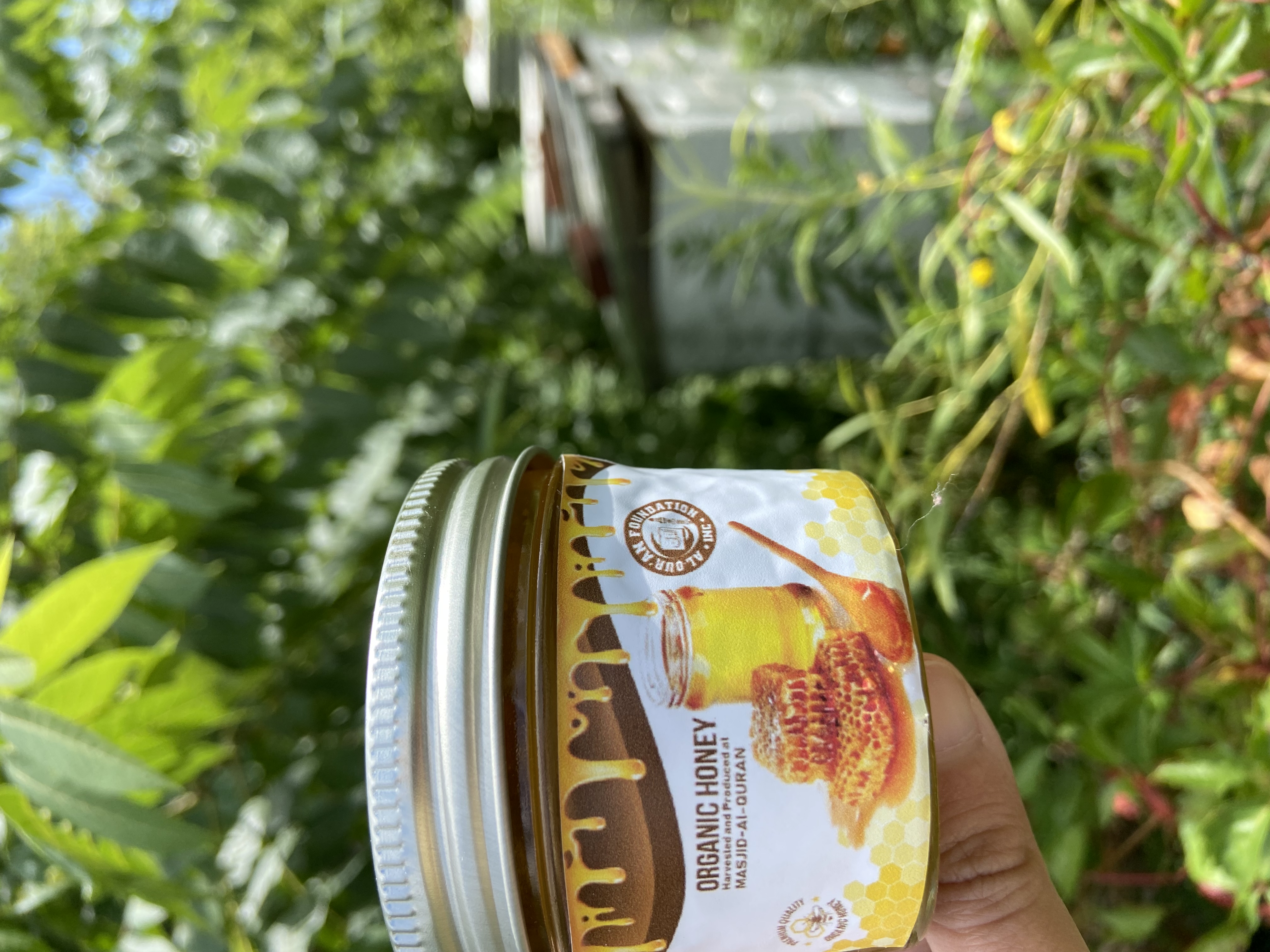
We also have a very unique program called the Shepherd School, with farm animals like lambs, chickens, and ducks, and we have beehives. We try to get students—from young kids up to high school and college students—involved in hands-on educational activities to get them away from their technological gadgets. It’s a struggle to convince them, but we are trying!
|
|
|
|
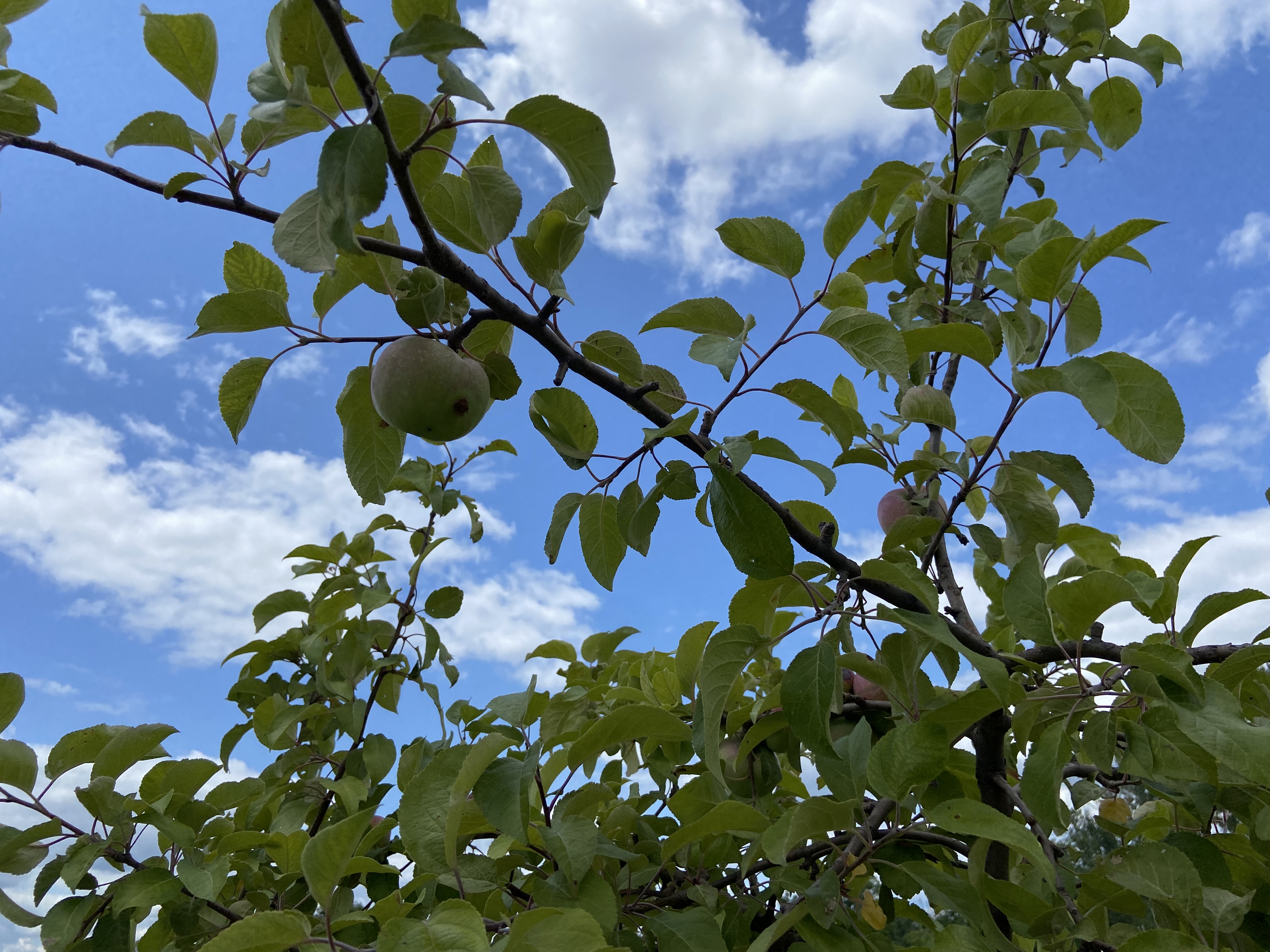
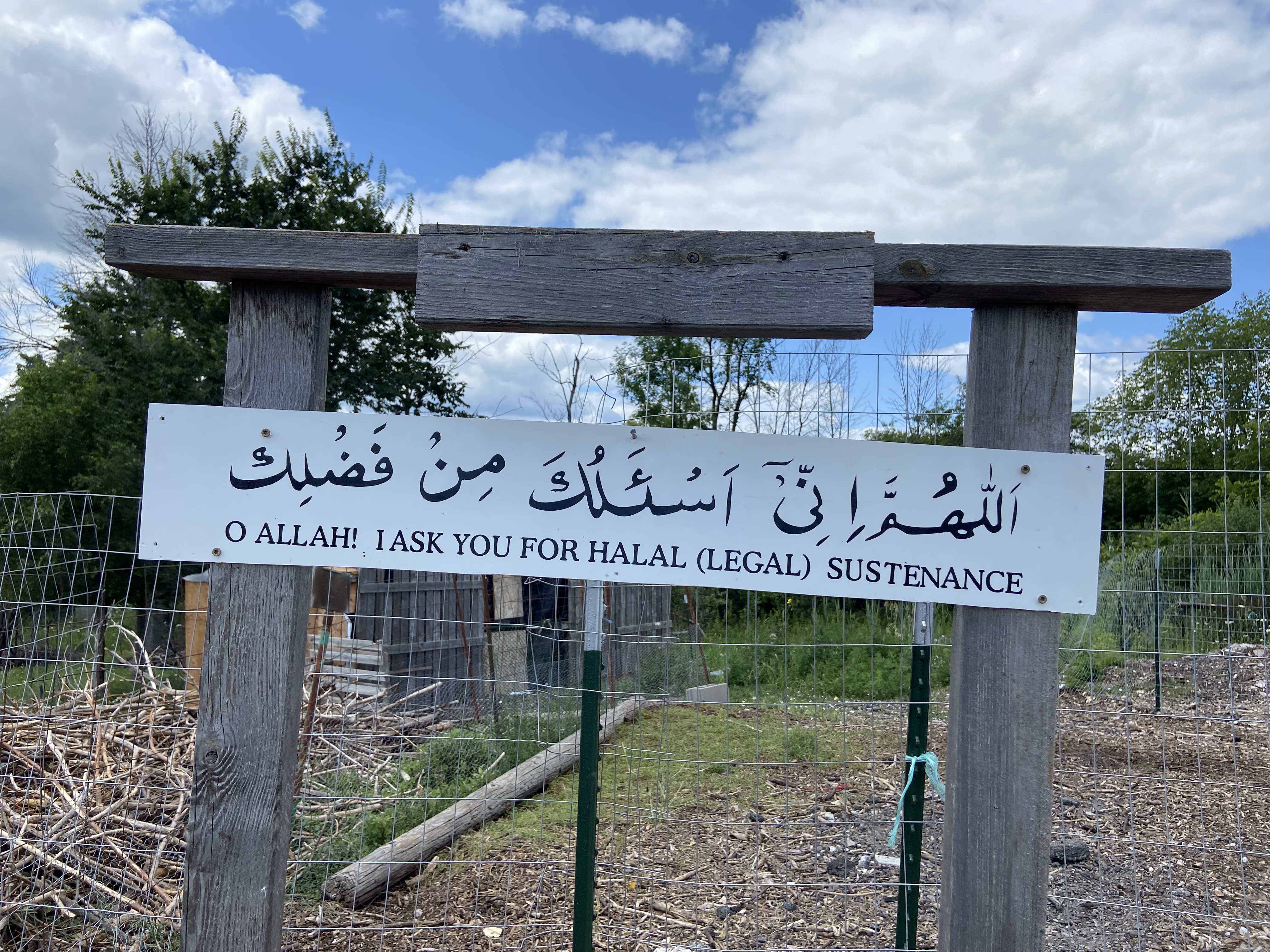
Clockwise L to R: Hafiz Shafique stands in the mosque’s vegetable garden; organic honey produced by the mosque’s beehives; apples trees in the fruit orchard on the grounds; prayers for the grounds. Photo Credit: Mirtha Sosa Pacheco
|
How does your faith influence your environmental work?
We have clear guidelines as people of faith. Almighty God tells us that human beings are created as the Khalifah—the stewards or representatives of Almighty God on Earth. Out of millions of other species, mankind was given this role. God reminds us of our responsibility: don't cause corruption on the Earth, don't disrupt the balance that God created, and take care of the Earth’s resources and other creations. For example, Almighty God tells us: “Eat and drink, but do not be wasteful, for God does not love the wasteful.” He tells us that the animals on earth and birds in the sky are communities like you, so it is your responsibility to care for and respect them.
We also have the tradition of the Prophet (peace be upon him). In Quranic verses and sayings of the Prophet, we are told that if we do our duty, we will be rewarded in this world and the hereafter. The Prophet (peace be upon him) taught this through his practice:
Cleanliness: When he migrated from Mecca to Medina, his companions got sick due to water pollution. He immediately commanded them to clean the city and water resources, teaching that cleanliness is half of faith.
Conservation: He saw a companion making ablution (wudu) and told him not to waste water. The companion asked, "Is there waste in ablution?" The Prophet replied, "Yes, even if you are on a flowing river."
Planting: He said that if you have a small plant in your hand and the Day of Judgment comes, finish planting it. When you plant something, and any bird, person, or animal eats from it, it is an ongoing charity (Sadaqah) on your behalf.
|
What have been your greatest successes and challenges so far?
I'll go with the challenges first—there are more challenges than successes! Unmaking overconsumption habits is hard because when people go outside in society, they become part of the whole system again. Resources and expenses for our community projects are also a continuous challenge. As for success, at least we have created concern and reminded people of their duty. A major practical success was deciding to eliminate plastic water bottles. Thanks to Sister Huda at Wisconsin Green Muslims, who donated water fountains, we saved around 5,000 to 6,000 plastic bottles during Ramadan alone!
We also have two green teams now—the Earth Care Masjid Green Team and the Masjid Al-Qur'an Green Team. We use our Friday sermons, when we have 400 to 500 people, to remind everyone of their responsibility. Looking ahead, we are planning to slowly bring in solar panels and set up rainwater harvesting.
|
|
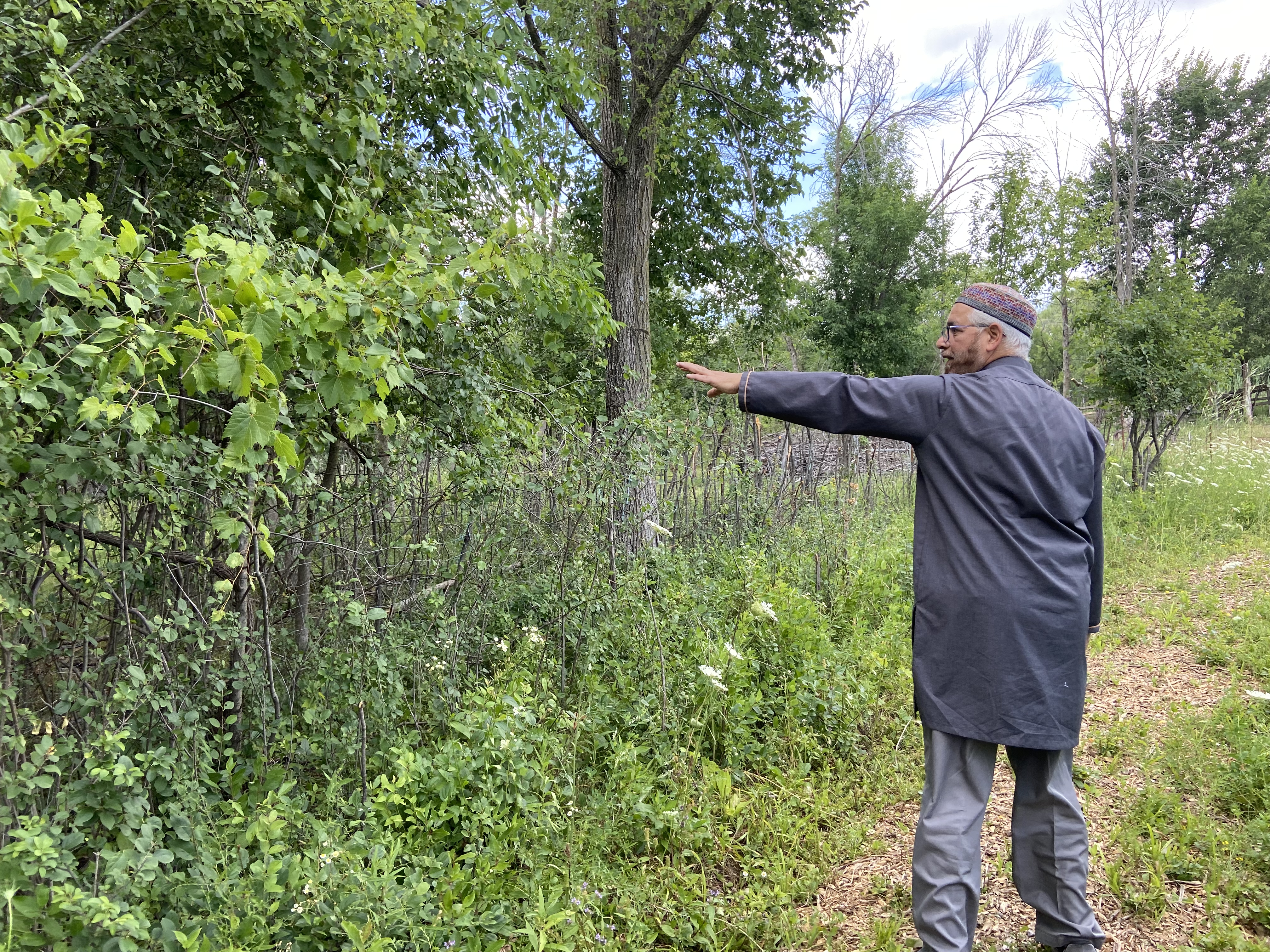
Hafiz Shafique shares plans regarding new walking trails on the grounds of Masjid Al-Qur’an in Milwaukee. Photo Credit: Mirtha Sosa Pacheco
|
What is your message to faith leaders and environmental advocates?
To faith leaders I say that position comes with responsibility. Faith leaders can make a big difference because the message comes from the pulpit, and people take it seriously. First, you need to believe in the message yourself, be part of it, and then convey it to the community. And remember, it's a continuous process, not just a one-time sermon.
To environmental leaders I advise you to build good relationships with faith leaders. You are the experts with the latest studies, findings, and resources. Reach out to faith leaders, share accurate information, and invite them to discussions. I learned so much from the Loka PREP program this year, many practical lessons that I can apply to my work here directly. When we work together, faith leaders can bring these crucial environmental issues directly to their congregations, who trust them.
|
|
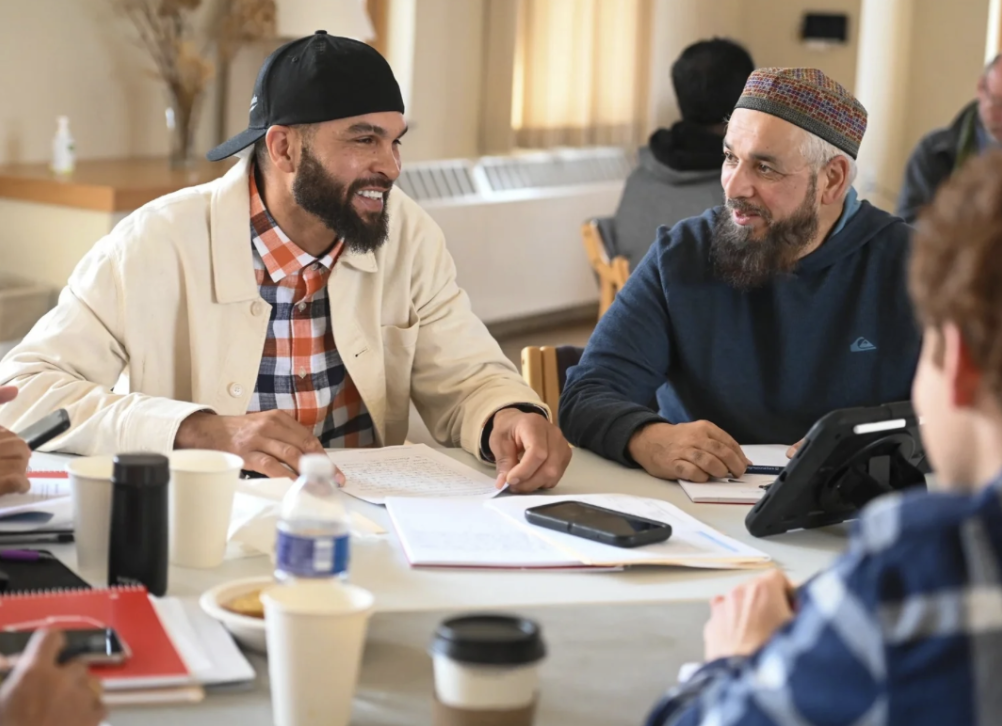
Brother Luqman Davis and Hafiz Shafique, both of Masjid Al-Qur’an in Milwaukee, share with other faith leaders at Loka’s PREP gathering at Holy Wisdom Monastery in Middleton, WI, March 2026. Photo Credit: Ben Jones
|
How can readers of this newsletter support your work?
Be part of this work at the local level. People in the Milwaukee area can come, volunteer, and help us promote our educational projects. We cannot have paid positions for everything, so if you have skills or time to volunteer, please come and get involved!
If you would like to support us financially, you can visit https://www.alquranmke.org/ to donate, and you can put in the memo that your donation goes to education, farm, or bee projects. Thank you.
|
|
|
|
|
|
|
|
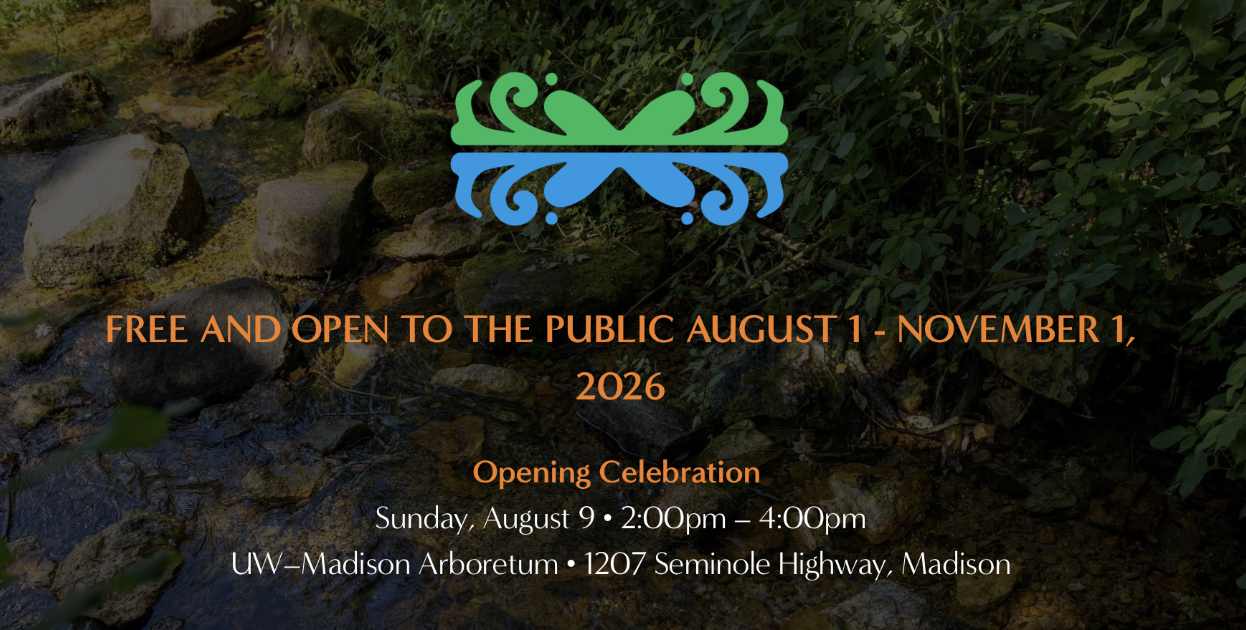
You’re Invited to Celebrate the Launch of the
Teejop Community Art Project!
|
When: Sunday, August 9, 2026 | 2pm - 4pm
Where: UW–Madison Arboretum, 1207 Seminole Hwy, Madison, WI 53711
Mark your calendars! We are thrilled to announce the official opening celebration of the Teejop Community Art Project, a vibrant new community offering exploring connection, heritage, and place. Organized in part by Janice Rice, a founding advisor for the Loka Initiative who currently serves on Loka’s Indigenous Advisory Council, the project promotes learning and awareness of the 14,000-year human story of Teejop (Four Lakes).
Through this initiative, participating artists created site-specific public art exploring the past and present relationship of the Hoocąk (Ho-Chunk) people to Teejop. Join us to honor the stories, creative vision, and community collaboration that brought this project to life!
Admission is free, and all are welcome!
|
|
|
|
|
|
Share Updates & Stay Connected!
|
|
|
|
Hashtags: #LokaInitiative #Loka🌎
|
|
|
|
Loka is an interdisciplinary collaboration among different programs at the University of Wisconsin–Madison. It is housed in the Center for Healthy Minds in collaboration with:
The opinions expressed here are solely the author’s and don’t reflect the opinions or beliefs of
UW-Madison, the Center for Healthy Minds or their affiliates.
|
|
|
|
|