
|
Dear ,
Tomorrow night, the Corn Moon, or the Mdaamini-giizis, will rise low on the horizon. In the Indigenous American Three Sisters agricultural method, corn is the eldest sister in a trio of plants grown together, along with beans and squash. These three crops were planted together all across Turtle Island by Native tribes—including the Ho-Chunk, the Menominee, and the Ojibwe peoples in the Great Lakes area—because they protect and sustain one another: the tall corn provides a pole for winding beans, the beans in turn stabilize the corn, and the spiny squash shades out weeds and deters predators. Not only this, but together they help to round out a nutritional diet: corn and beans combine to create a complete protein, and squash supplies vitamins. The miracle of these three plants called for stories, ceremonies, celebration and gratitude. It is a teaching that is more relevant than ever.
Last week, the United Nations Environment Programme released a report titled Limiting Overshoot, concluding that human activity has caused the earth to surpass the global average temperature threshold of 1.5 degree Celsius (2.7 Fahrenheit) above the preindustrial average by 2030. Why does that matter? The 1.5°C target was the agreed upon limit of global warming set by 195 countries at the UN Climate Change Conference in 2015 at Paris. A decade later, 1.5°C is now becoming the baseline temperature. Keep in mind that every fraction of a degree above 1.5°C puts us at much greater risk of hitting catastrophic tipping points that may be impossible to reverse. Right now, at 1.4°C, we are already experiencing hundreds of thousands of deaths from climate-boosted floods, droughts, heatwaves, wildfires, and other extreme weather phenomena on an annual basis. According to the World Economic Forum, the numbers will be in the millions in a couple more decades.
It is normal to feel grief and rage and let ourselves dissociate due to overwhelm. I have certainly felt that way. Lately, however, I find myself opening up to a new way of perceiving collapse. In Loka’s Psychology of Deep Resilience course, one of our esteemed contemplative leaders, Prentis Hemphill, says, “Our grief isn't a distraction from real work, but it is one of the seeds of real revolutionary action.” There is a revolution emerging. You can see it in Minnesota. You can see it in Nepal. Shisir Khanal, Nepal’s Foreign Minister, made a historically unprecedented statement after the flood saying, “We are shifting our diplomatic framework from “aid” to “justice and compensation”. This is not a matter of charity; it is a matter of legal and moral liability.”
Collapse is not the end, but a beginning. It is not death but rebirth. The truth is that neoliberal institutions are stupid in a way human beings are not. Neoliberalism, despite seeing the crash ahead, will not avert its predefined path because the only metrics it has for success is immediate profit. But we as individuals will. We as communities can. Our metrics for success include peace, wellbeing, and justice. The teaching for us is everywhere, including in the Three Sisters cropping method. I am struck by how the force that binds these crops together is interdependence and the knowledge system that has nurtured and passed this down for generations is Indigenous wisdom. We are not alone floundering in a pre-determined cataclysmic event but instead, bound to one another, stronger together, and determined to withstand bad weather and predators alike as a community. Unlike institutions that are locked into predefined paths, we human beings get to choose our actions moment to moment. Each moment is a new beginning.
|
|
|

|
Dekila Chungyalpa
Director, the Loka Initiative at the Center for Healthy Minds
University of Wisconsin–Madison
|
|
|
|
|
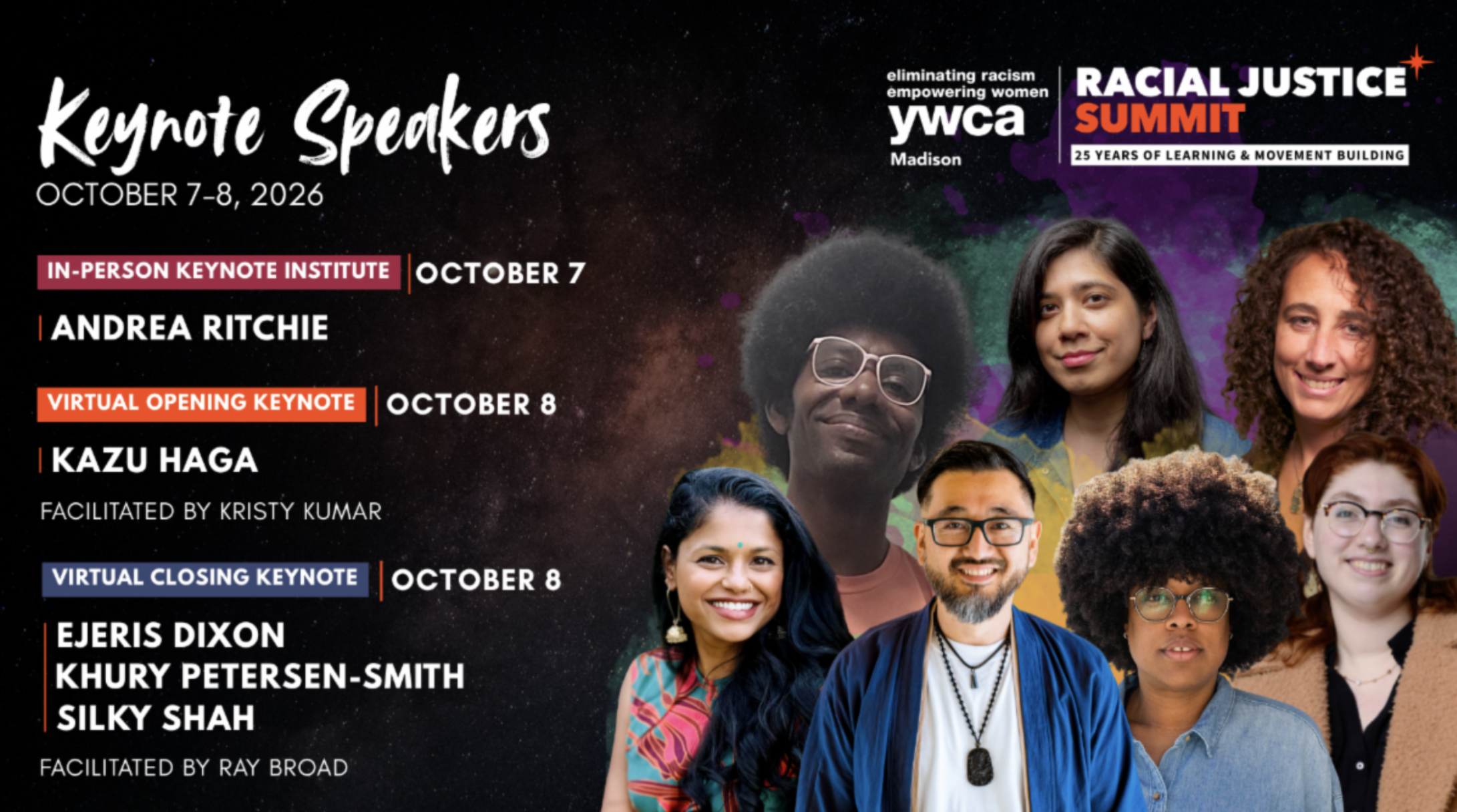
YWCA Racial Justice Summit
|
In two short weeks, YWCA-Madison will host their annual Racial Justice Summit, supported by the Center for Healthy Minds. Keynote speakers include Ray Broad, Ejeris Dixon, Kazu Haga, Kristy Kumar, Khury Petersen-Smith, Andrea Ritchie, Silky Shah! (You might recognize one of them as a Psychology of Deep Resilience contemplative practice leader). The Summit opens space for multiracial and intergenerational dialogue, as well as collective visioning across justice movements. Loka is fortunate to be partnered with an organization that also believes in a holistic approach to justice. Our director, Dekila, and Loka collaborator, Soumya Palreddy, will be leading a Compassion Collective session that offers Deep Resilience as an embodied methodology combining the best of contemplative practice, group dialogue and therapy, and community based somatic practices. We know that when we connect the body, mind, and spirit, we can harness collective power to transform systems and heal the world around us.
To stay updated on YWCA events, sign up for their newsletter here!
|
|
|
|
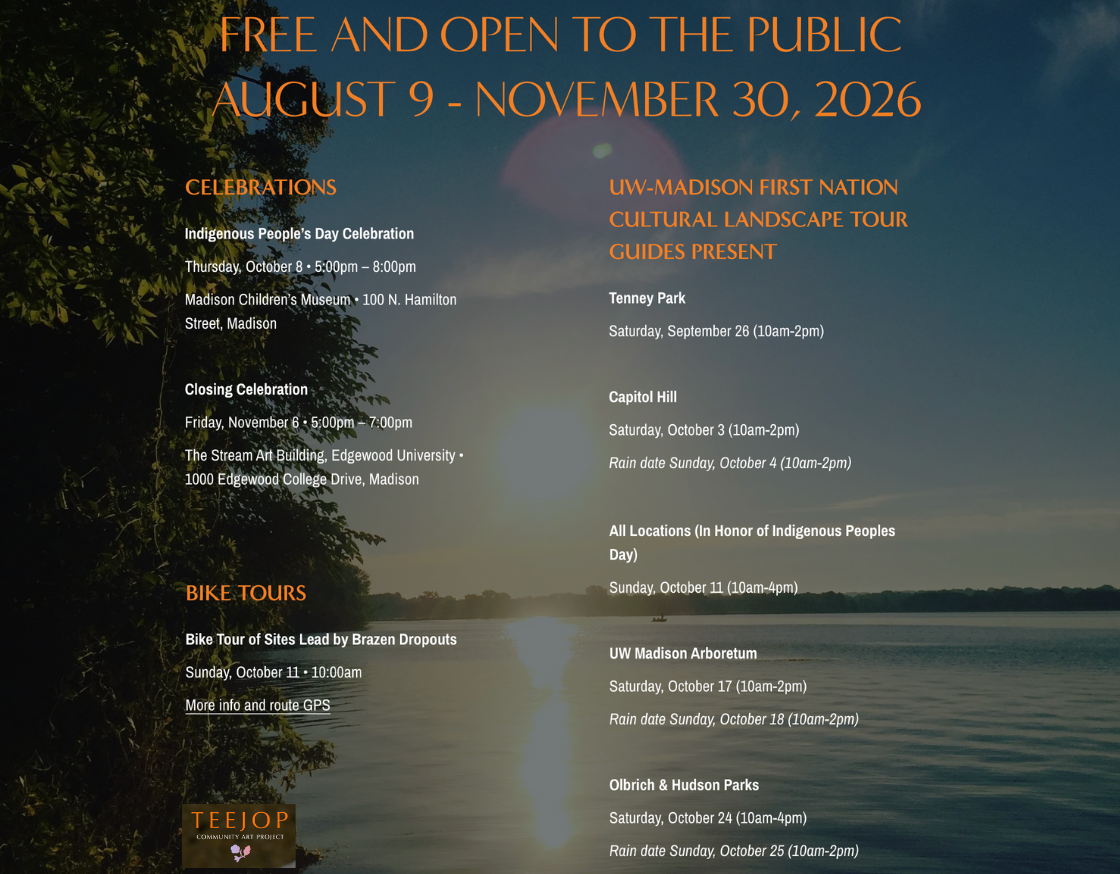
Teejop Community Art Project
|
The Teejop Community Art Project, which opened on August 9, will run until November 30, 2026! You can visit any one of the five sites across Madison–which are free, open, and accessible to all–using their guide for engagement. If you want an even more guided experience, there will be seven opportunities before the project closes! These include a bike tour, two community celebrations, and five distinct walking tours with First Nation Cultural Landscape Guides. In honor of Indigenous Peoples Day, the tour on October 11 will run from 10am-4pm and cover all Teejop Community Art Project installations across the city.
Learn more about the project here!
|
|
|
|
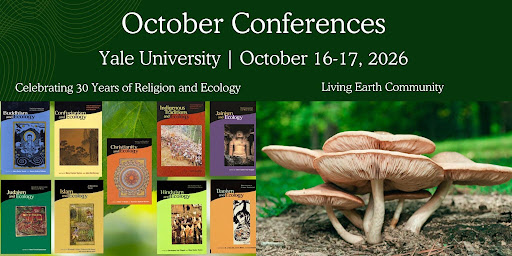
Celebrating 30 Years of Religion and Ecology at Yale University!
|
On October 16, Yale University will be celebrating 30 years of Mary Evelyn Tucker and John Grim’s work, which established the academic field of religion and ecology as it exists today! We are excited for this major milestone and Dekila will be there to celebrate with her beloved mentors and friends.
|
|
|
Share Updates & Stay Connected!
|
|
|
|
Hashtags: #LokaInitiative #Loka🌎
|
|
|
|
Loka is an interdisciplinary collaboration among different programs at the University of Wisconsin–Madison. It is housed in the Center for Healthy Minds in collaboration with:
The opinions expressed here are solely the author’s and don’t reflect the opinions or beliefs of
UW-Madison, the Center for Healthy Minds or their affiliates.
|
|
|
|
|