
Spring 2026 Newsletter
For Alumni & Friends of the Department of Philosophy
Letter from the Chair
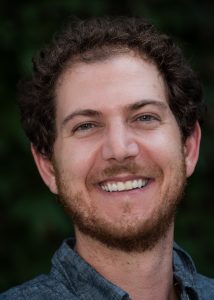
As I sit pondering the walls and windows of my new office in Helen C. White, I sometimes catch myself humming the Talking Heads song “Once in a Lifetime.” Since taking over as chair of the Department of Philosophy in January, the lyrics have a special resonance for me. That’s because I often find myself asking questions like, “Well, how did I get here?” and “How do I work this?” Our previous chair, Emily Fletcher, did an excellent job in the role; things ran smoothly – like water flowing underground – under her wise leadership. I will do my best to fill Emily big shoes; hopefully my colleagues, who have placed their trust in me, won’t collectively cry out, “My God, what have I done?” Certainly, there are no grounds for that level of despair yet.
In many respects, the Department is thriving. We are growing: last year, we hired four new professors; we are on track this year to hire another assistant professor as part of the Rise-AI initiative. These new faces bring with them exciting new research programs, teaching approaches, and possibilities of collaboration. Our curricular offerings are also growing. We recently introduced an introductory class on the ethics of data and AI; we also have an advanced class in the works. In addition, philosophy is spearheading a new interdisciplinary certificate focused on the ethics of data and AI; its mission is to provide students with the conceptual resources and interdisciplinary skills necessary for addressing the ethical, legal, and societal implications of AI. We expect hundreds of students to pursue this certificate
Read the full letter from the Philosophy Dept. Chair, James Messina, HERE

Stay in Touch Alumni!
Are you an alumni of the Philosophy Department? We’d love to hear about your successes and how things are going for you post-graduation. Let us know about your accomplishments and update your contact information by completing the form below.
Undergraduate Journal and Conference
Thanks to the generous donations from our Fill the Hill Campaign, our Undergraduate Club will be hosting a conference this month. This conference will showcase papers our own undergraduates have been working on along with undergraduates from around the country.
Additionally, our undergraduate club will be publishing this year's journal, Agora, in April as well. You can find last year's edition here: Undergraduate Club Journal "Agora"
Harry Brighouse elected President of the Central Division of the American Philosophical Association
By Rob Streiffer
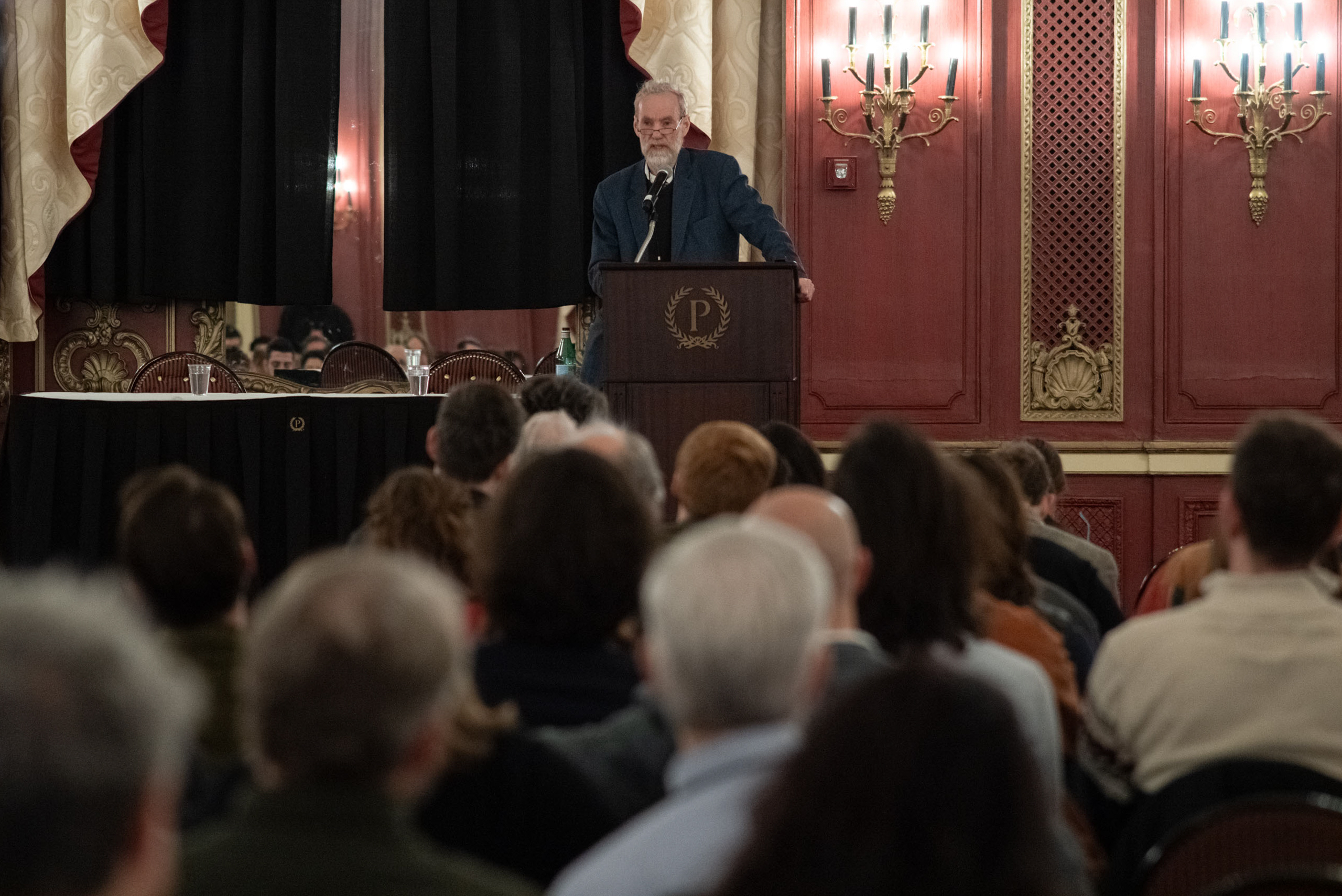
Photo Credit: American Philosophical Association, Central Division
A hearty congratulations to Professor Harry Brighouse (UW-Madison) for being elected to serve as the 2025-2026 president of the Central Division of the American Philosophical Association!
Harry is an expert in the philosophy of education, examining the policies and practices of educational institutions from the perspectives of political philosophy as well as normative and applied ethics. In February, Harry delivered the presidential address at the Central Division annual meeting, held in Chicago this year. In his address, he argued that undergraduate education in general as well as philosophy as a discipline have “the intellectual resources that enable us to contribute in a valuable and distinctive way” to make students better citizens, and that this should be one aim of an undergraduate education.
Read full article HERE
Graduate Students Awarded APA Prizes
Patrick Cronin Awarded 2025 Milton K. Munitz Prize
Anton Dolmatov Awarded 2026 William James Prize
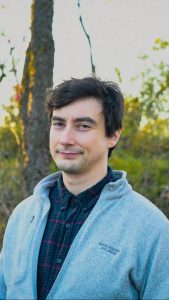
Patrick Cronin was awarded the 2025 Milton K. Munitz Prize from the APA for his essay ‘The Collapse of Hume’s Everlasting Check’. The prize is awarded annually to a scholar at any career stage who has a paper accepted for inclusion in the APA Eastern Division program through the normal anonymous review process that deals significantly with metaphysics, cosmology, or ontology, or explores Munitz’s approaches to these questions. Patrick describes his essay as follows:
This paper substantially develops, defends, and generalizes an unsung objection from David Hume’s lesser-known contemporaries to show that the Humean approach to miracles is conceptually incoherent. To that end, I draw upon neglected 18th-century source materials from the Anglican Bishop William Fleetwood, the philosophers Mary Astell and George Turnbull, a dissenting minister named Caleb Fleming, and William Adams, the eventual Master of Pembroke College. I channel their collective insights to show that any method which assigns a severe improbability to miracle claims based on their exotic causal features makes two interrelated conceptual mistakes.
Read the full description HERE
Anton Dolmatov was awarded the 2026 William James from the APA for his paper ‘Equal Opportunities for Future Citizens’. The prize was for the best paper in the area of American philosophy that is both (a) written by a philosopher who received their PhD within five years of the beginning of the calendar year in which the paper is submitted, or is a graduate student, and (b) accepted for inclusion in the Eastern Division program by the program committee through the normal process of anonymous-reviewing. Anton describes his paper as follows:
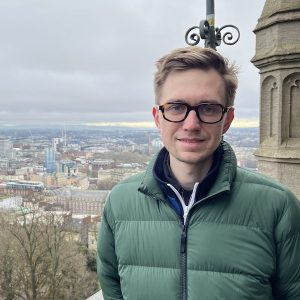
At the Eastern APA 2026, I presented a paper called “Equal Opportunities for Future Citizens” defending the claim that immigration restrictions on the rights to enter and stay are wrong because of their impact on naturalized citizens who were once subject to them. All naturalized citizens were at some point non-citizens, and their lives often continue to be influenced by the immigration restrictions that once applied to them. If the long-term effects of these policies prevent naturalized citizens from becoming fully equal citizens, then, I argued, the state should not have introduced them.
Read the full description HERE
Meet Alex Kerr
by Alex Roberts
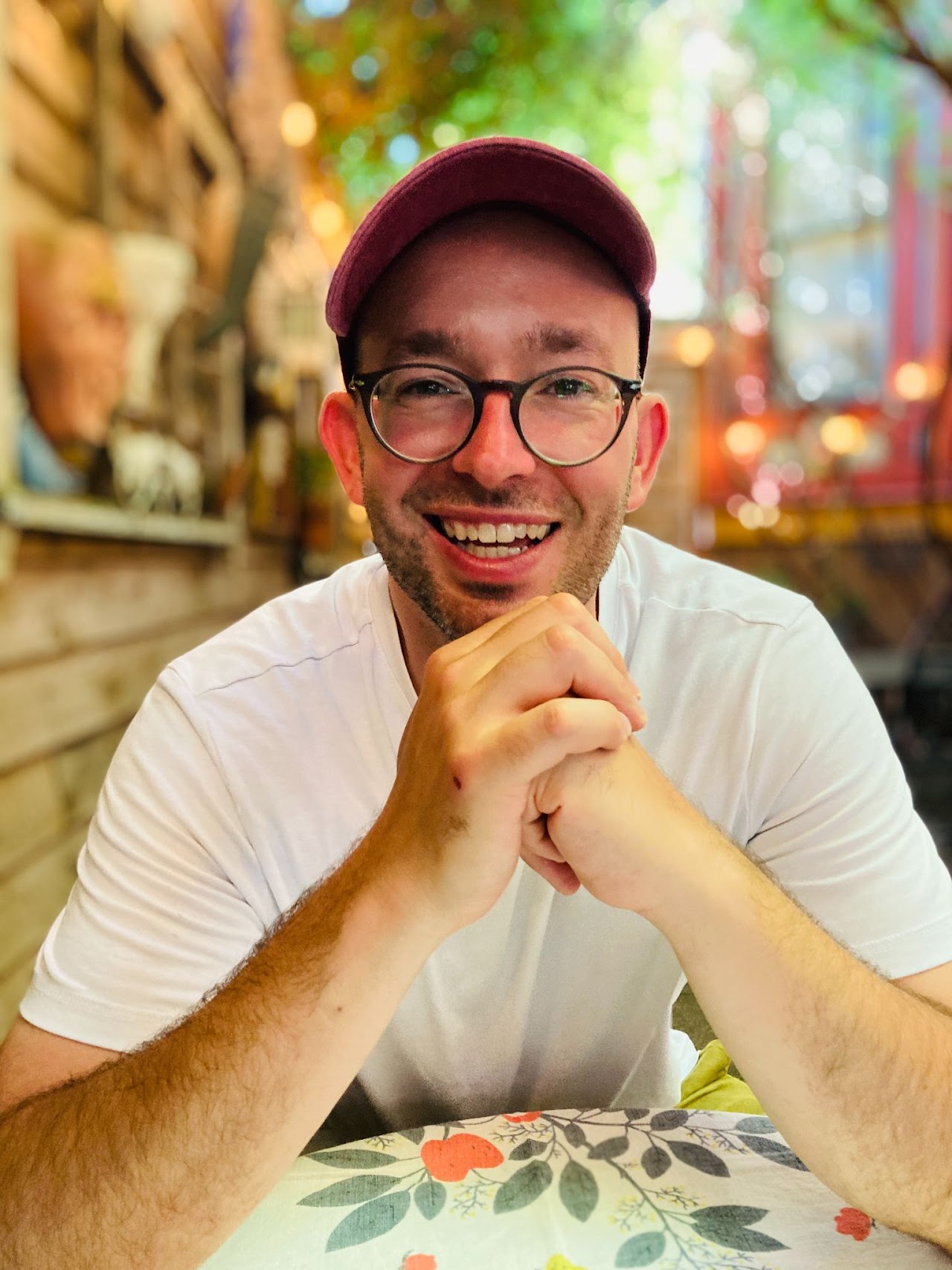
AR: Let’s begin with a question about your philosophical interests. How about you tell us a bit about what you have worked on so far, and what you will be working on in the near future?
AK: My work so far has been about how things appear in sense perception. I'm interested in explaining why things look, feel, sound, taste, and smell the way they do. So far, I've worked on musical experience, spatial experience, and our experience of color. In the near future I'll be working on a paper that tries to pin down what it would be to "explain consciousness"---to specify what philosophical and scientific explanations of consciousness are trying to explain---and another paper about how we should let feelings guide decision-making.
Read the full article HERE
Meet Sophie Dandelet
by Alex Roberts
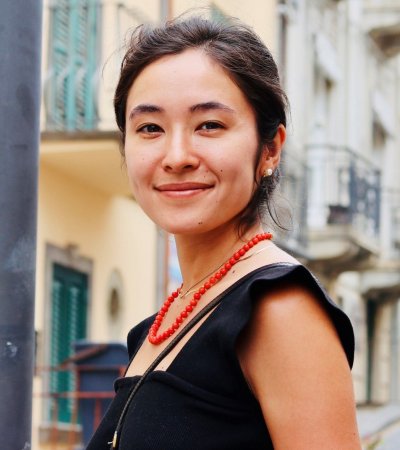
AR: Let’s begin with a question about your philosophical interests. How about you tell us a bit about what you have worked on so far, and what you will be working on in the near future?
SD: Most of my work has been centered on questions about belief. Some of these are very general, like: When a belief is justified, in virtue of what is this the case? Others are about narrower phenomena, like: What’s motivated reasoning, and why does it seem like a kind of bad reasoning? Those are both questions that I’ve written on recently. And I imagine that I’ll keep working on questions about belief for a long time…after thinking about this stuff for years, I feel more mystified than when I began, to be honest. One question that I’ve found especially puzzling recently: When we contrast believing X with, say, just being highly confident that X, or treating X as a working hypothesis, what are we getting at, exactly? What makes belief different from those other attitudes? I’ve written something on this question that’ll hopefully come out in an edited volume this year.
Read the full article HERE
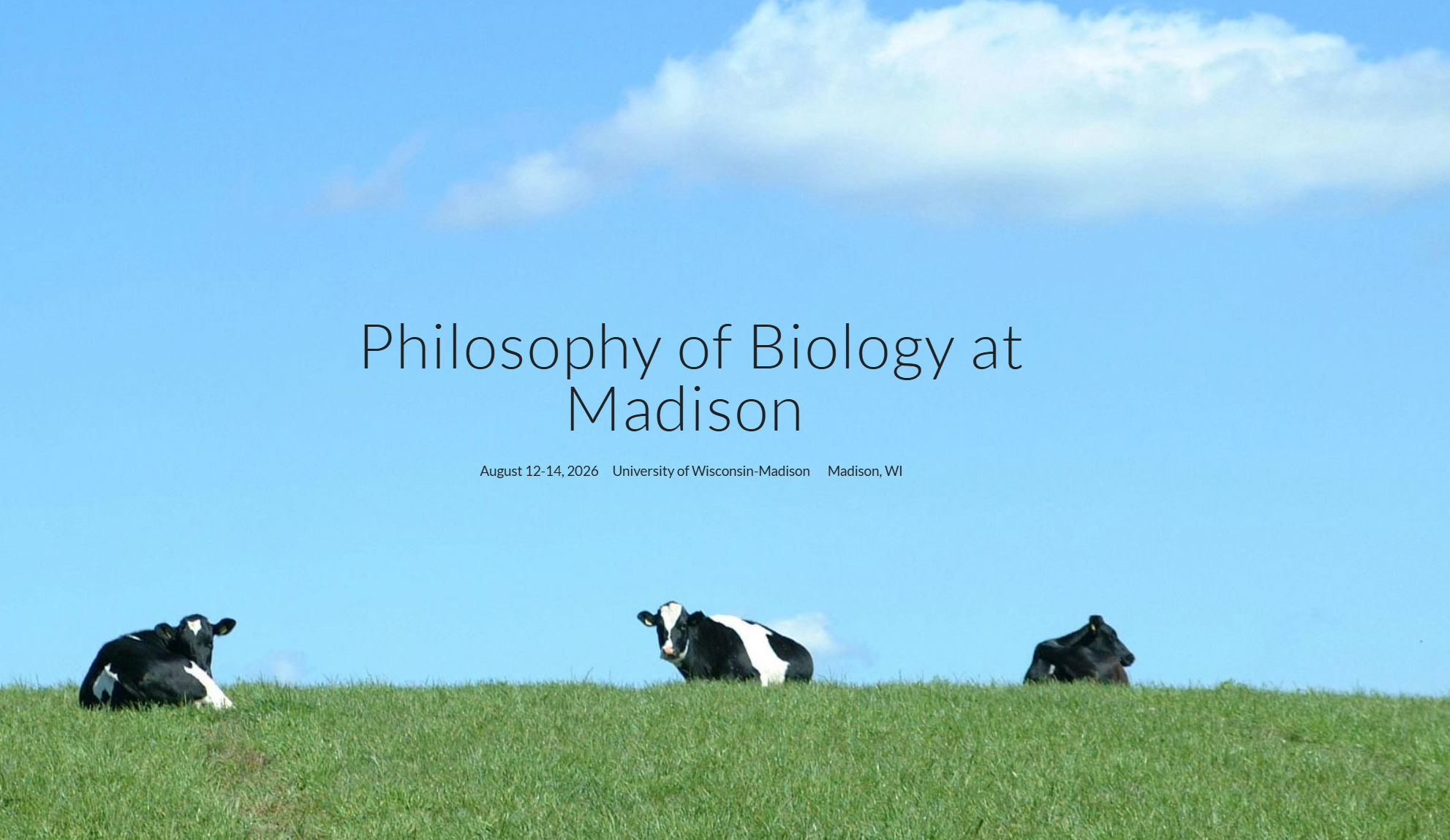
Philosophy of Biology at Madison (POBAM) Coming Back to UW-Madison Campus
August 12-14, 2026
Philosophy of Biology at Madison (POBAM) is a philosophy of biology workshop that aims to showcase innovative work in philosophy of biology and to identify new areas that philosophers of biology might work on. Workshops are structured to provide constructive feedback and opportunity for informal and friendly discussions, while encouraging work bridging philosophy, biology, and other cognate fields.
POBAM began at the University of Wisconsin, Madison in 2010 and moved to the University of Utah in 2018. In 2026, it will be back in Madison! Aja Watkins is hosting the event, co-organized with Matt Haber (University of Utah) and Marina DiMarco (Washington University, St. Louis). Special thanks also to two of our grad students, Julia Pelletier and Matt Maxwell, for helping out.
The program will be available soon on our website: https://sites.google.com/view/pobam2026/home
To register to attend the conference in-person, please fill out our registration form here: https://forms.gle/mjmmuzQ5PdqcHRHV7
Faculty Accomplishments
Harry Brighouse was elected to the American Academy for the Arts and Sciences. He also was elected Central Division President of the APA. At the recent meeting of the APA in Chicago, he gave a speech called “Civic Aims of College Education”.
Jamie Goodrich, Steve Nadler, and Annette Zimmerman won a 750k NEH grant for establishing a research center for "Humanistic Inquiry into Uncertainty and AI".
Paula Gottlieb was appointed International Academic Programs (IAP) program leader of the UW London program. This semester she is on site in London, England, directing key aspects of the study abroad program. Among other duties, she is teaching two courses; advising students; ensuring the welfare of students; coordinating program excursions and activities; and appraising the overall success of the program.
Alex Meehan published (with Snow Zhang) “Bayes is Back” in 2025 in the Philosophical Review, widely considered to be one of the most prestigious journals of philosophy.
Farid Masrour published (with Ori Beck) an edited volume of essays in 2025 called The Relational View of Perception (Routledge Press).
Steve Nadler has two books coming out this spring: Spinoza, Atheist (Princeton University Press), and Why Read Maimonides Today? (Cambridge). He is also finishing up a 8-year stint as director of the Institute for Research in the Humanities.
Annina Loets paper ‘Inexact Ability’ is forthcoming in the Journal of Philosophy, widely considered to be one of the most prestigious journals of philosophy.
Mike Titelbaum published (with Joachim Horvath and Steffen Koch) a book called Methods in Analytic Philosophy: A Primer and Guide (Open access publication of The PhilPapers Foundation (2025)).
Annette Zimmerman gave the keynote lecture, “Democratizing AI: Why and How” at the Dutch Research School of Philosophy (OZSW) Annual Conference 2025, at the Technical University of Delft. They also published a paper (with A. Zeppa, S. Pandey, K. Diao) called “Don’t Give Up on Democratizing AI for the Wrong Reasons,” in NeurIPS (2025), one of the most prestigious venues for research on AI and machine learning.
