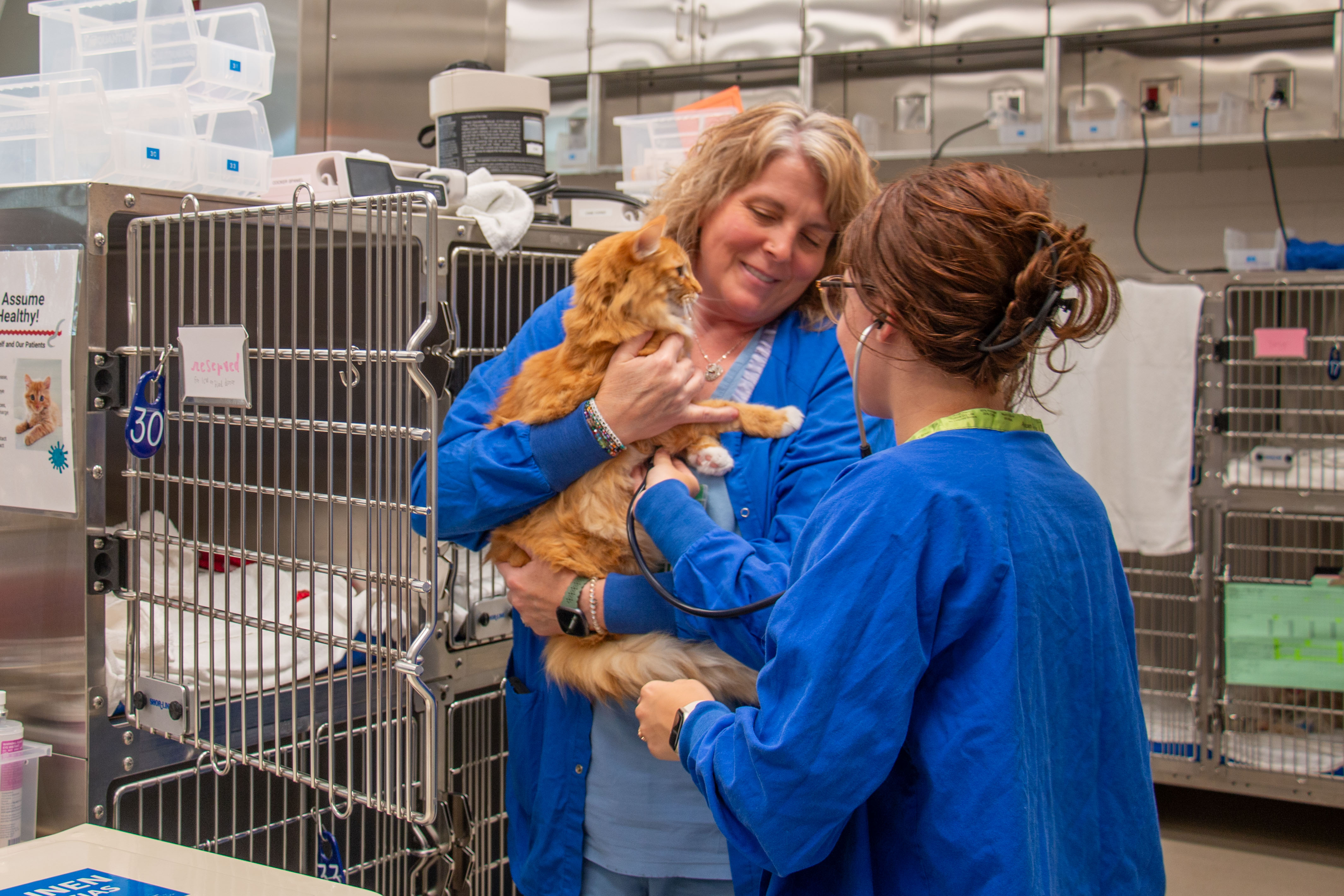
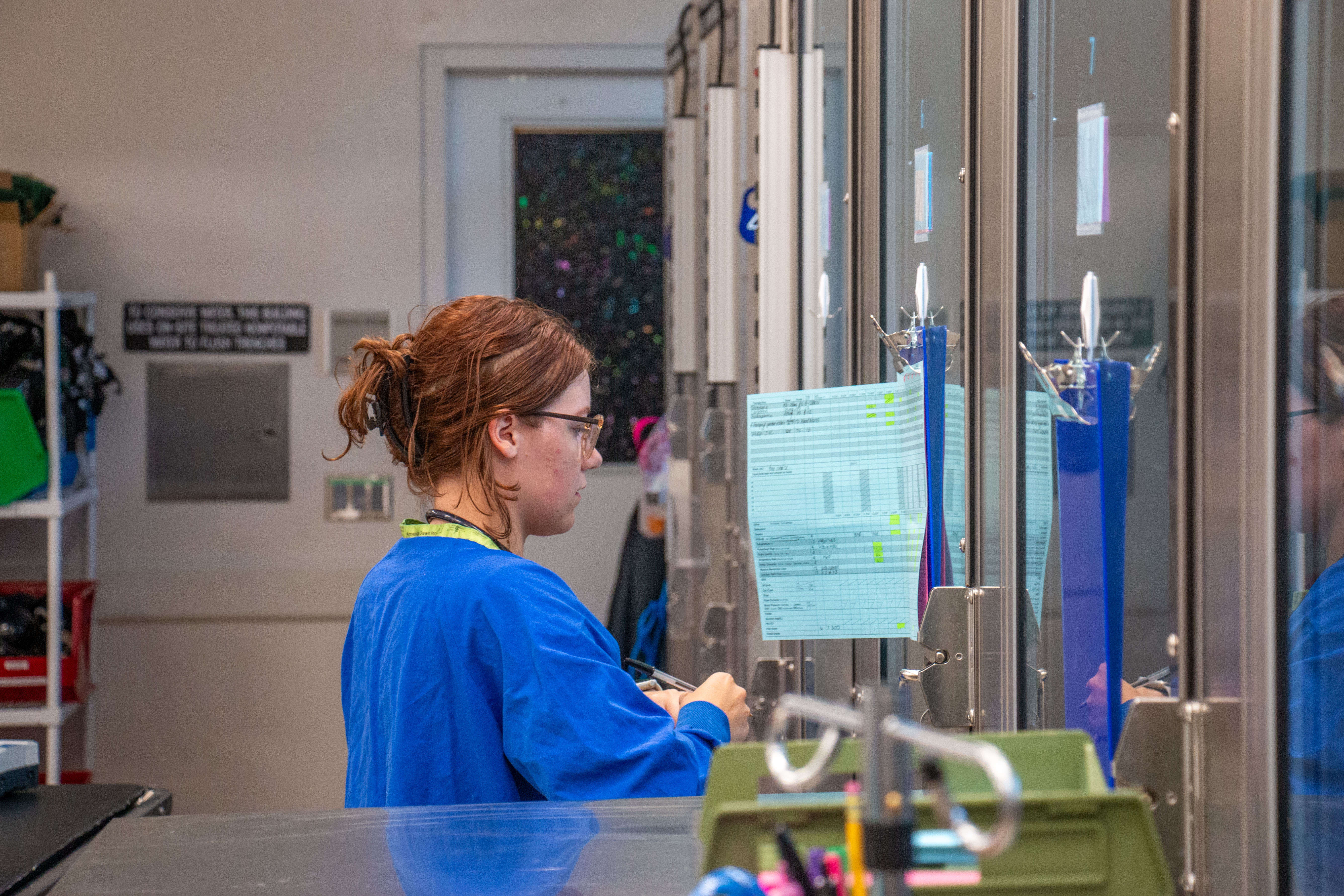
UW Veterinary Care’s new intermediate care ward (ICW) is enhancing patient recovery with compassionate, hands-on support. Since opening April 1, the ICW has housed more than 160 patients that required elevated attention but not critical care. The SVM’s new, state-of-the-art animal hospital was designed to provide expanded ICW space, which bolsters UWVC’s ability to address each patient's specific treatment needs and offers increased overnight hospitalization. The service provided by the ICW underscores UWVC’s commitment to personalized care and will help ensure patients make the smoothest possible transition from hospital to home.
|
|
|
Staying Cool: Summer Safety Tips for Livestock and Horses
|
|
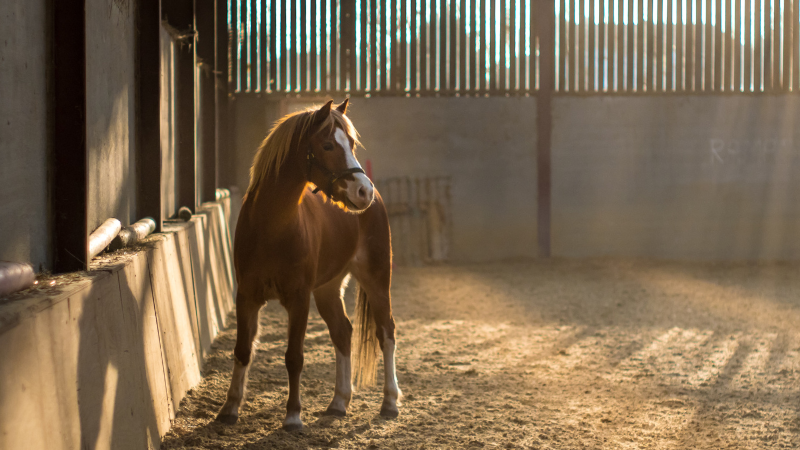
Hot summer days in Wisconsin aren’t just tough on people — they can be dangerous for animals, too. From horses to goats, cattle to sheep, heat stress can sneak up fast and lead to serious health problems for animals.
Veterinarians at the School of Veterinary Medicine and UW Veterinary Care share what to watch for, how to keep livestock and horses cool and safe, and why even northern states aren’t immune to heat-related risks. Learn more about keeping animals comfortable and healthy during the hottest stretch of the year here.
|
|
|
Wanted: Dogs with Overbites for Clinical Study
|

|
Is there a gap between your dog’s front teeth when their mouth is closed? Is the lower fang tooth behind or inside the upper one? Your dog might be eligible to participate.
There is no cost to participants. The study pays for a free screening exam, including bloodwork. Screening visits take roughly 30 minutes. An oral exam and physical exam will be conducted to confirm eligibility. If eligible, a second visit that includes a sedated CT scan of the jaw will take place.
Generally healthy Labrador retrievers, golden retrievers, standard poodles, standard-sized Labradoodles and goldendoodles, and German shepherds are eligible to participate. Researchers are not currently considering other breeds of dogs.
Questions? Contact Amy at 608-890-3484. All UW Veterinary Care clinical studies are voluntary.
|
|
|
Graduate Students Harness AI to Improve Animal, Human Health
|
|
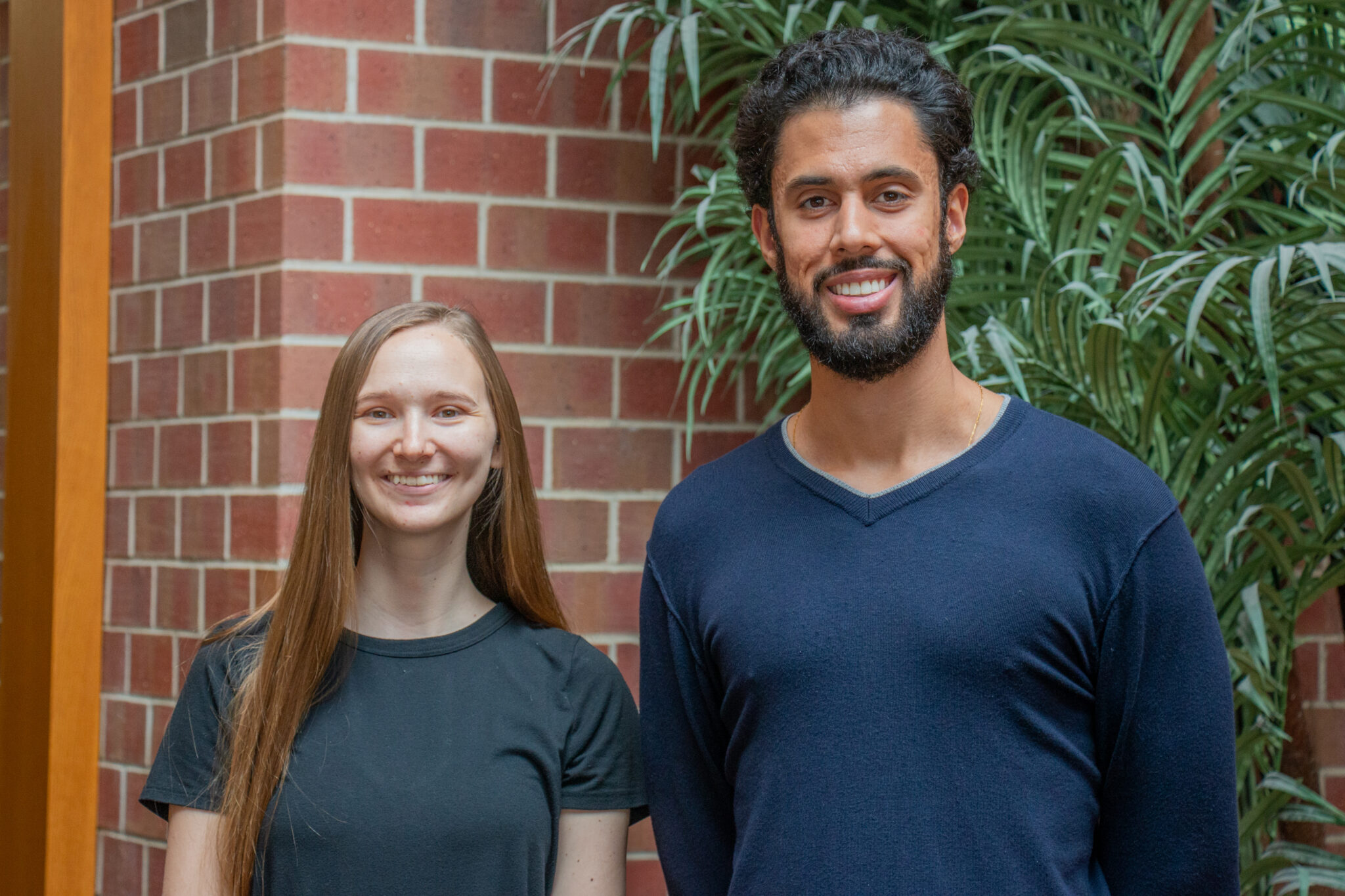
Marlee Henige, left, and Fernando Valle
Marlee Henige (DVM’23), a PhD candidate funded by an NIH T32 training grant, aims to use AI to allow veterinarians to make better-informed decisions in less time. Her research focuses on Digital dermatitis, a contagious skin infection associated with lameness in cattle. Henige is developing a real-time tool that uses DNA sequencing and computer vision to detect antimicrobial-resistant genes.
Fernando Valle (MSx’26) is using AI to detect lameness in beef cattle. Using top-view images of beef cattle walking, he is training a model to predict lameness based on hundreds of variables. His work, funded by industry partners, aims to improve animal welfare and reduce economic burdens for farmers.
Read more about the researchers' work here.
|
|
|
|
|

|
- Thomas Friedrich (’97 PhD’03; Department of Pathobiological Sciences) was quoted in a recent WPR story exploring the effects of the uncertain federal funding landscape on graduate programs at UW-Madison. He emphasized the critical research his PhD students are conducting to help fight viruses such as influenza, HIV, Zika and the virus that causes COVID-19.
- Keith Poulsen (’00 DVM’04 PhD’12; Department of Medical Sciences; director, Wisconsin Diagnostic Veterinary Laboratory) spoke to WPR about preventative measures farmers and organizers are taking to prepare for fair season amid the ongoing presence of avian flu in the United States. Read the story here.
- Research by Jorge Osorio (MS’88 PhD’96; Department of Pathobiological Sciences), Mostafa Zamanian (Department of Pathobiological Sciences), Cole Knuese ('22 MSx'25), Daniel Limonta, and Elsa Cárdenas-Canales (PhD'21) was featured in a recent story from Science exploring how mutual grooming among vampire bats is helping spread an innovative rabies vaccine.
- A paper co-authored by Osorio titled Critical illness in immunocompromised patients: insights into relapse or persistent severe acute respiratory syndrome coronavirus 2 (SARS-CoV-2): case series report was recently published in the Journal of Medical Case Reports.
- A recent FarmProgress story preview and upcoming presentation by Theresa Ollivett (Department of Medical Sciences) on research-based practical strategies for improving calf health. The presentation will be part of UW-Madison’s 2025 Smart Calf Rearing Conference, which is set to make its U.S. debut in late September.
|
|
|
|
|
Highlights from your social media mentions of UW Veterinary Care
and the UW School of Veterinary Medicine
|
|
|
|

|
“Pretzel is home and looking VERY dapper in his surgery suit. He’ll be on strict cage rest the next couple of weeks (much to his dismay), but don’t worry, he’ll be getting LOTS of love. Huge thank you to UW Veterinary Care, especially Dr. Fink, for taking such amazing care of our sweet boy.” - Thrifted Kittens Animal Rescue on Facebook
|
|
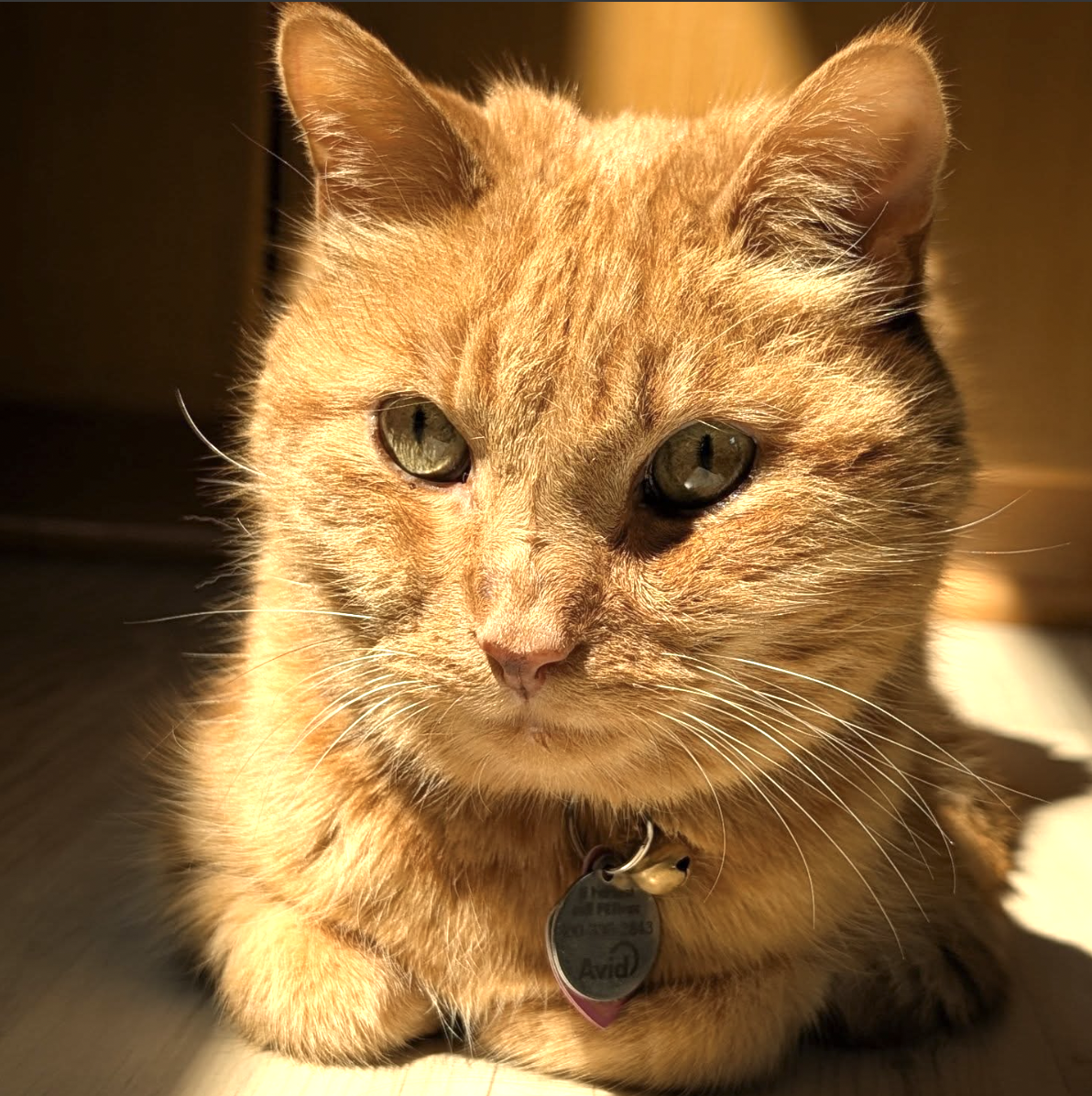
“Our 17 year old Ricco kitty had a good check-up @uwvetmed yesterday. The new diet & adjusted meds has him eating & purring like his old self.” – jonathanc75 on Instagram
|
|
|
|
|