|
|
|
|

|
|
|

|
|
|
Poppy’s Story: A Safe Home and a Second Chance
|
|
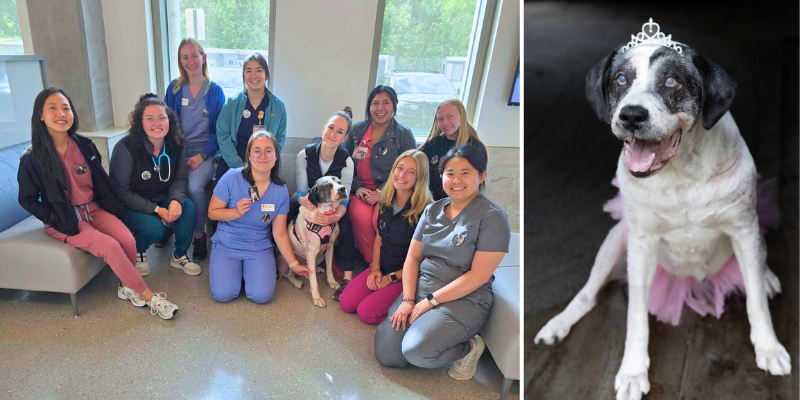
When Poppy first came to UW Veterinary Care, she was a mere 60 pounds, hairless and on the brink of death. Sadly, she had been mistreated and starved by those who were supposed to be providing her care and love. Thankfully, she was rescued out of those abusive circumstances – a situation that eventually resulted in criminal charges and consequences. Poppy had a lot of healing to do when she was placed with Lisa Edge, a former teacher and nurse, now member of the Second Chances for Blind Dogs Foundation. After consulting with local veterinarians and realizing Poppy would need specialized care, Lisa turned to UWVC in the hopes of saving her life. It has taken months of effort and coordinated care, but thanks to Lisa’s big heart and determination as well as the dedication and compassion the UWVC staff, Poppy is now a healthy 90 pounds and thriving in Lisa’s home in Mineral Point, along with six other dogs with special needs. Poppy has captured the hearts of the whole team here with her strong spirit and loving personality. We’re looking forward to sharing Poppy’s full story this fall in our next issue of On Call magazine. If you’re not subscribed, email oncall@vetmed.wisc.edu and we will add you to the list.
In the meantime, check out the Noah’s Legacy Facebook page, where Lisa shares a lot of love and a lot of photos of her special dogs!
|
|
|
Wisconsin State Journal Features SVM North Building
|
|
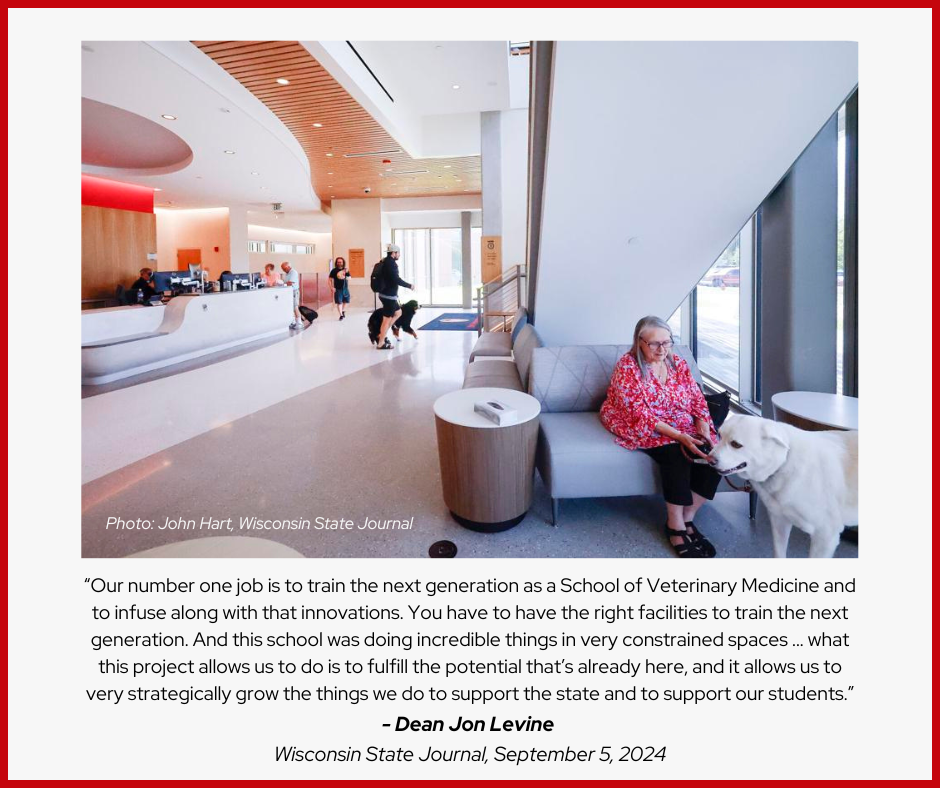
We’d like to thank Kimberly Wethal, higher education reporter and John Hart, photographer, both of the Wisconsin State Journal, for coming out to tour and report on SVM North. We were grateful for the opportunity to share how our expanded facilities ensure that our students, faculty, staff, and researchers have spaces, equipment, and technology that match the incredible caliber of work that happens at the SVM and UWVC every day.
|
|
|
Studying Safety and Efficacy of
Laverdia/CCNU to Treat Lymphoma
|
|
We’re seeking dogs with Naive Lymphoma for a clinical study to evaluate safety and effectiveness of three different treatment protocols using CCNU and Laverdia. Dogs must have a confirmed diagnosis of lymphoma but can be any age or breed, male or female, as long as they weigh more than 10 kg (22 lbs). The lymphoma needs to have been determined to be B-cell or T-cell via flow cytometry; dogs cannot have had any treatment for lymphoma including chemotherapy, corticosteroids (prednisone) or immunosuppressants; and they cannot have any other severe diseases. The treatment period requires six visits to UWVC over about 15 weeks. The cost of recheck exams, lab work and medications administered at these visits are paid for by the study.
|
|
|
|
|

|
As part of the ongoing celebration of UW-Madison’s 175th anniversary, Dean Jon Levine and Kristi Thorson, associate dean for advancement and administration, attended a series of events in La Crosse. WXOW-TV covered the day’s activities, including a visit to Central Animal Hospital in Onalaska, the veterinary clinic of SVM alumni Doug Kratt (DVM’98) and Kim Kratt (DVM’00).
Planning any travel with pets this fall? Wirecutter has a guide of all the factors to consider for a variety of modes of transportation, including input from UWVC veterinarians Jill Caviness and Molly Racette (both of the Department of Medical Sciences).
Heidi Kellihan (Department of Medical Sciences) recently joined The Larry Meiller Show live on WPR to talk all things heart health for cats and dogs. Listen to the full archived interview.
|
|
|
Correction: If you missed our article on how SVM and UWVC team members were key collaborators on some innovative care for zoo animals this spring, please revisit it. We’ve added an important update from a reader who pointed out that our reference to Kettle Moraine Equine Hospital and Regional Equine Dental Center should have indicated Jon M. Gieche, DVM, FAVD EQ, Diplomate AVDC EQ, who founded and leads those facilities. You can learn more about Dr. Gieche, his team and KMEH-REDC here. We appreciate the omission being brought to our attention.
|
|
|
|