Happy 2026! As we begin the new year, I want to round out our dialogue about UW Vet Med’s five-year strategic plan. So far, we have discussed our place on the leading edge of veterinary medical education, focused on elevating UW Veterinary Care’s national reputation, and explored the groundbreaking innovations taking place at our school. Today, let’s dive into our outreach efforts, their impacts, and our commitment to strengthening them.
Our community outreach extends from Madison to around the world, where our faculty, staff, and students work hard to improve health and wellbeing for animals, people, and the planet.
|
|
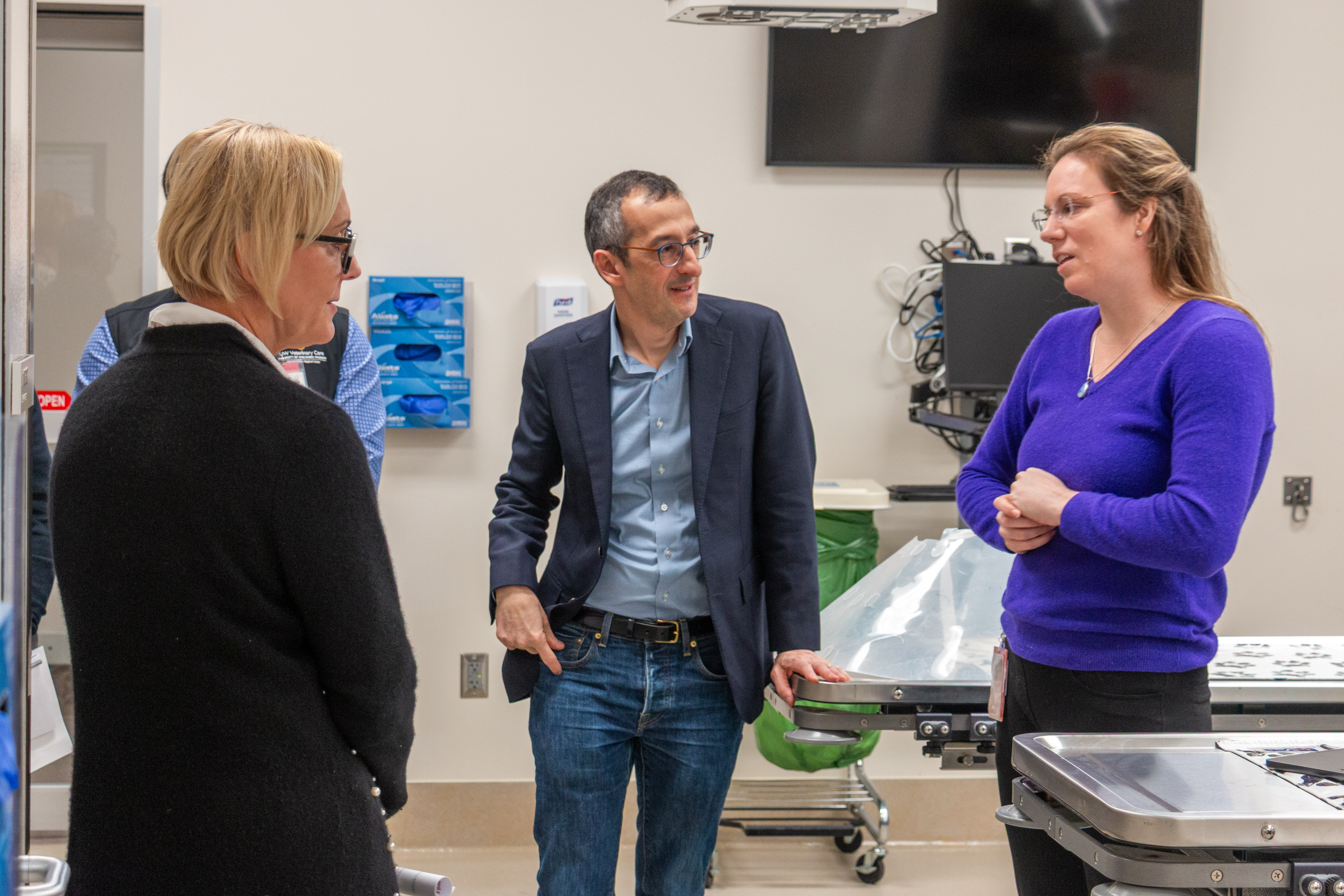
Last month, we welcomed Dorota Grejner-Brzezinska (left), UW-Madison's vice chancellor for research, to UW Vet Med. It was great showing her our incredible new spaces. Thanks to all of our community members who participated in her visit!
|
|
|
|
Since 2010, the Dairyland Initiative (DI) has used science to help dairies deploy best practices for cow comfort, milk quality, farm sustainability, and more. They’ve helped Larson Acres, an Evansville farm, implement advanced ventilation and heat abatement systems to keep cows cool during increasingly hot Wisconsin summers. More recently, Courtney Halbach traveled to South Africa to speak at a conference and visit local dairies to help them manage summer heat.
WisCARES is a critical resource to Dane County, providing veterinary care and social services to pet owners experiencing financial or housing insecurity. During more than 3,000 appointments each year, the team works to keep pets with their owners and helps people gain access to social support services, all while providing our students with invaluable learning opportunities.
UW Vet Med’s shelter medicine program continues to grow. Building on successful programs in Milwaukee and Dane County, the team has also been expanding its work with Native Nations, including a new relationship with the Lac du Flambeau Band of Lake Superior Chippewa Indians. UW Vet Med clinicians and volunteers have been hosting pop-up veterinary clinics on the tribe’s reservation, providing a range of care. This commitment to community engaged care is bolstered by our generous supporters, including two recent gifts totaling $40,000.
Our outreach efforts also advance biomedical research. The UW PREP program offers recent graduates a year-long opportunity to gain research experience and enhance their applications before going to graduate school. Separately, the Summer Scholars program provides DVM students with research opportunities to enhance their interest and knowledge of biomedical research careers.
These efforts, and the work of countless other UW Vet Med community members, make me incredibly proud. I can’t wait to see what’s to come in 2026.
Until next time…
On, Wisconsin!
|

|
|
|
|
|
|
|
|
UW Veterinary Care: Year in review
|
|
|
|
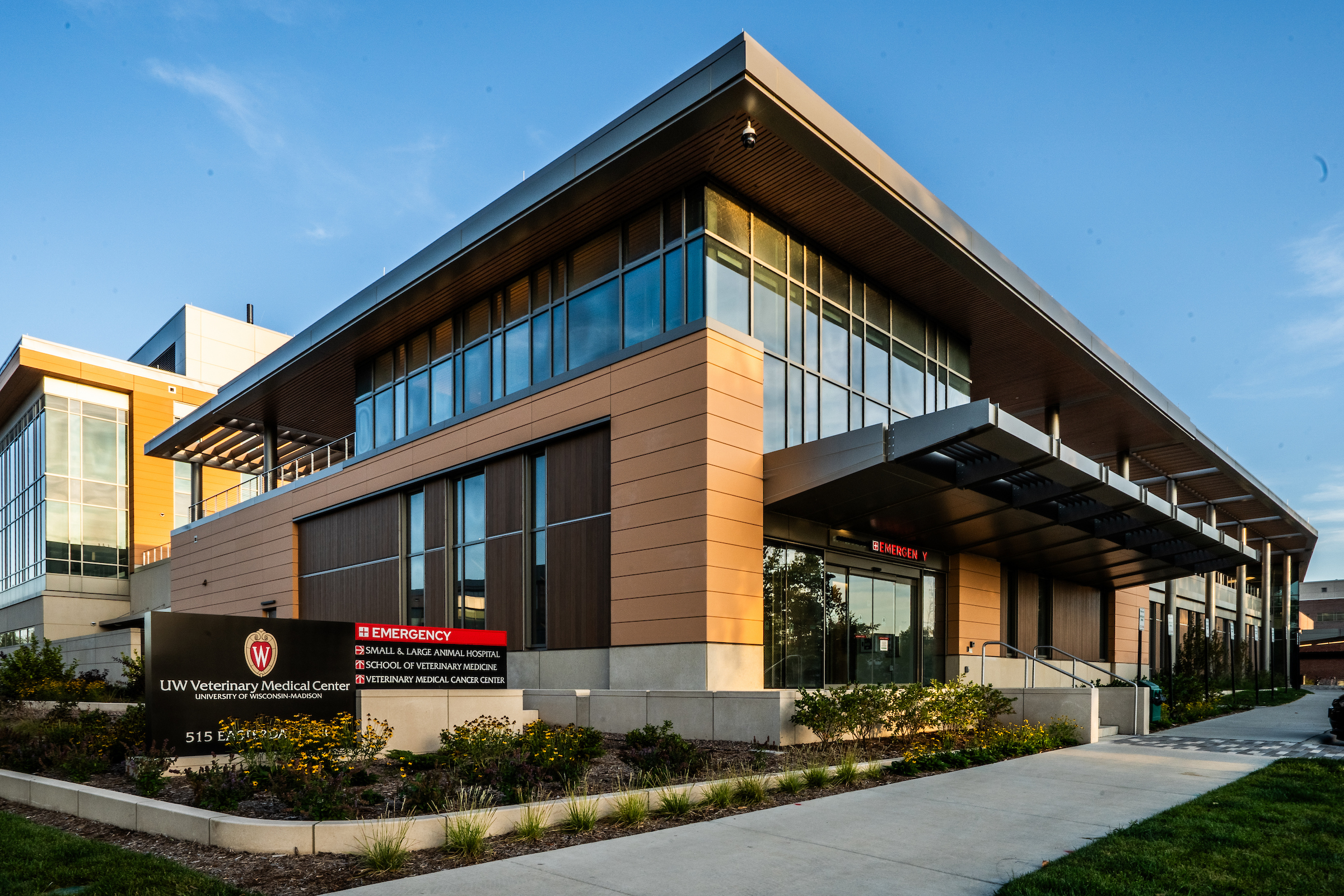
It was another busy year in our state-of-the-art teaching hospital. In 2025, UW Veterinary Care welcomed some 30,000 patients of all shapes and sizes from 34 states and Washington, DC. That included more than 20,000 dogs, 5,500 cats, almost 900 horses, 650 rabbits, and more than 600 birds. Our clinicians treated less common animals, too, including fish and marsupials.*
Thank you to everyone for their hard work and commitment to delivering outstanding, compassionate care!
The UW Veterinary Care team also continued to grow in December. Please join me in welcoming the following new staff members to the hospital:
- Sarah Godin started work as a pharmacy technician
- Lora Reynolds joined primary care as a veterinary nurse
- Carly Amundson joined the emergency department as a veterinary nurse assistant
- Monica Schlimgen started as a veterinary nurse in the large animal hospital
- Carson Statz joined primary care as a veterinary nurse
* Species count as of Dec. 14, 2025.
|
|
|
Dean Levine appointed to UWHCA Board of Directors
|
|
|
|
Chancellor Jennifer Mnookin last month appointed UW Vet Med Dean Jon Levine to serve as a temporary member of the University of Wisconsin Hospitals and Clinics Authority (UWCHA) Board of Directors.
The UWCHA is the public body that governs UW Health. The dean’s appointment to the board underscores the university’s commitment to one health — the recognition that “the health of humans, domestic and wild animals, plants, and the wider environment (including ecosystems) are closely linked and interdependent,” according to UW-Madison’s Global Health Institute.
“Your leadership and perspective will provide valuable contributions to the Board during this interim period,” the chancellor wrote to Dean Levine in a letter. He will maintain the appointment until a new dean for the School of Nursing is named.
|
|
|
|
|
|
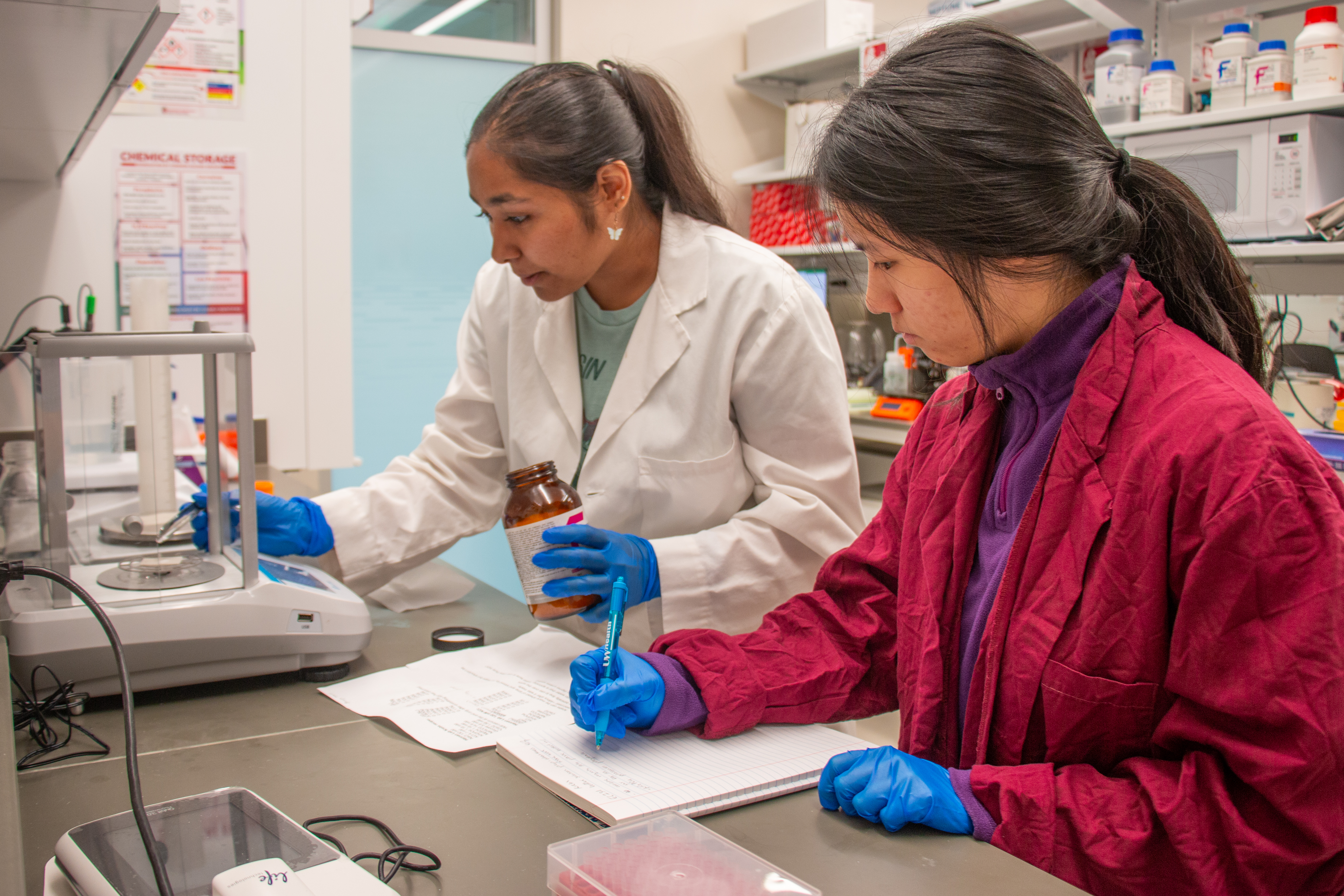
Above: Shreya Nair, left, works with Olivia Zhu in the Vezina lab.
- UW Vet Med is well represented among research projects selected for funding by WARF and Zoetis. The funding supports projects aimed at improving the health of livestock and companion animals. Marulasiddappa Suresh, Matt Reynolds (’98 PhD’06), and Mostafa Zamanian (all of the Department of Pathobiological Sciences) are among those from the school leading or working on projects that received funding. Congratulations!
- The lab of Troy Hornberger (Department of Comparative Biosciences) was awarded an additional approximately $300,000 to continue its studies examining whether resistance exercise can be used as an effective therapy for patients who are suffering from facioscapulohumeral muscular dystrophy.
- McLean Gunderson (’97; Department of Comparative Biosciences) has been accepted as a scholar to the Universities of Wisconsin’s Teaching Fellows and Scholars Program.
- Shreya Nair, a research assistant in the Vezina lab, won the best poster award for her work, Hormonal Mechanisms of Lower Urinary Tract Dysfunction, at the Collaborating for the Advancement of Interdisciplinary Research in Benign Urology (CAIRIBU) annual meeting. Well done!
|
|
|
|
Now accepting nominations
|
|
|
|
The Graduate School is accepting nominations for the Faculty Award for Excellence in Graduate Student Mentoring, which recognizes faculty who demonstrate exceptional commitment to supporting the growth, success, and well-being of UW–Madison graduate students. The award highlights faculty whose engagement goes beyond standard advising expectations and reflects exemplary, evidence-based mentoring practices.
Nominees must meet the following criteria to be eligible:
- UW–Madison tenure track faculty, clinical health sciences track (CHS) faculty, or research professors are eligible.
- Nominees should have (or recently have had) responsibility for mentoring and working closely with UW–Madison graduate students in an independent learning environment.
- Nominees may come from any discipline, provided they mentor graduate students in a scholarly activity.
Interested in nominating someone? Find more info about what makes a strong candidate and how to submit a nomination here. Nominations are due Feb. 13.
|
|
|
|
|
|
- Dean Jon Levine and alum Meg Mueller (DVM'10) were quoted in a Milwaukee Journal Sentinel story examining the shortage of veterinarians in rural Wisconsin.
- Allyssa Fogarty, Shuai Jia, Jillian Wlbourne, Claire DuPuis, and Fei Zhao (Department of Comparative Biosciences) recently had Crucial roles of mesenchymal Gata2 in murine epididymal development published in PNAS.
- Alum Nicole Nietlisbach (DVM’19) was recently featured in a Wisconsin Natural Resources story exploring the work of veterinarians at the state DNR. Nietlisbach, along with two other staff veterinarians, is responsible for ensuring the population health of Wisconsin’s fish and wildlife species. Read the full story here.
- Brandon Scharpf of the Vezina lab is first author of a paper, Macrophages and TGFB Signaling Regulate Fibrosis in the E. coli-Infected Mouse Prostate, published in the American journal of Physiology-Renal Physiology.
- Tyler Beames of the Lipinski lab is first author of A cell-based Sonic hedgehog signaling transduction system to identify additive and synergistic chemical interactions, a paper published in Toxicological Sciences.
- Thomas Friedrich (’97 PhD’03; Department of Pathobiological Sciences) and Keith Poulsen (’00 DVM’04 PhD’12; Department of Medical Sciences; Director, Wisconsin Veterinary Diagnostic Laboratory) are quoted in a recent Nature story about H5N1 focused on how to prevent the next flu pandemic.
- Sunil Singh and Rachel Walkup of the Lipinski lab recently had Rare variants in PRKCI cause Van der Woude syndrome and other features of peridermopathy published in the American Journal of Human Genetics.
|
|
|
|
|
|
|
|
Jan. 16, 4:30 p.m. to 6 p.m.
Dean’s Get Together
SVM South, 2nd Floor Lobby
Jan. 17, 6 p.m. to 8 p.m.
VMX Reception
Hyatt Regency Orlando
Please contact Kristi Thorson if you plan to attend
Feb. 20, 4:30 p.m. to 6 p.m.
Dean’s Get Together
SVM South, 2nd Floor Lobby
|
|
|
|
|
|
|