Letter from the Chair
Greetings, friends of Wisconsin philosophy!
It is hard to believe more than a year has passed since the last time I have written you as department chair. Our department is growing more than ever, and I am delighted to share a few of the many exciting things happening with UW Philosophy.
This year has been one of the busiest faculty hiring seasons in memory, and we are thrilled to welcome several new colleagues. Last fall, Alex Meehan joined us and quickly made an impact by designing the popular new course, “Philosophy of Quantum Mechanics”. This fall, we are delighted to welcome Elizabeth Brake, whose work focuses on ethics, political philosophy, and feminist philosophy, as well as Sam Roberts, whose expertise lies in logic, metaphysics, and the philosophy of mathematics. Looking ahead to spring, we are excited to be joined by Sophie Dandelet, specializing in epistemology and ethics, and Alex Kerr, whose research centers on philosophy of mind and cognitive science. We are eager to integrate our new faculty fully into the life of the department and to introduce them to our students, whose learning and engagement will undoubtedly be enriched by their presence.
We all assumed our faculty hiring was finished for the time being but have just received the exciting news that Philosophy has been authorized to hire a campus-funded Research, Innovation, and Scholarly Excellence (RISE) position. We will be hiring a philosopher for the RISE-AI initiative who specializes in philosophy of mind, with a teaching focus on AI and related computing technologies. This is an amazing opportunity for us to bolster existing departmental strengths and add a new colleague who will advance an interdisciplinary research program that deepens our understanding of human cognition and consciousness and probes our understanding about the presence and nature of cognition and consciousness in AI systems.
In addition to our new faculty members, we have also added four new affiliate faculty: Keisha Lindsay (Gender and Women’s Studies and Political Science), Gary Lupyan (Psychology), David O’Brien (Educational Policy Studies), and Nina Varsava (Law). It has been a pleasure to welcome our affiliate faculty to colloquia and other department events, and to deepen our intellectual and institutional ties with them.
Alas, we also lost a giant in the field with the retirement of Larry Shapiro, who just finished his 32nd and final year of service. Graduate students had the privilege of taking a final seminar with him entitled “Larry’s Favorite Papers,” a fitting way to share his intellectual trajectory with those just entering the field. We celebrated and reminisced with Larry at a retirement party in May, at which he gave a memorable speech in which his outrageous wit was on full display.
UW-Philosophy is actively positioning itself as a leader in inquiry about big questions in AI and data ethics. Leading the charge are Annette Zimmermann and Jimmy Goodrich, who ran a Research Lab focusing on the intersection of political philosophy, philosophy of economics, and AI and data during the 2023-24 academic year. This lab transitioned into a research group at the Institute for Research in the Humanities on Unicertainty & AI, bringing together an interdisciplinary team including Devin Kennedy (History), Alan Rubel (Information-School), Clinton Castro (Information-School), and Jeremy Morris (Communication Arts). This group ran regular works-in-progress meetings for faculty and graduate students and organized two public lectures in 2024-25.
Other notable triumphs in this effort include two successful National Endowment for the Humanities (NEH) grants. One supports the development of a certificate program in AI and Data Ethics, which will build on the two AI and Data Ethics courses we added to our curriculum last year. The second supports the College of Letters & Science’s new Center for Humanistic Inquiry into AI and Uncertainty which is being co-led by our own Steven Nadler. Other UW philosophers involved with the project are James (Jimmy) Goodrich, Annette Zimmermann, and Clinton Castro.
Furthermore, the esteemed Annette Zimmermann delivered our annual Philosophers at Work public talk in November, entitled “Democratizing AI.” Dr. Zimmermann’s talk tackled some of the most pressing questions regarding AI including: What role do we want this technology to play in our lives going forward—and which values are at stake as we search for our answer? The turnout was exceptionally high and Q&A was lively. The talk was sponsored by the very generous Charles Manthey Winter Philosophy Department Endowment Fund. We are very grateful to Charlie, and all of you, who generously support our department with your kind donations.
In addition to our regular annual events, Mike Titelbaum hosted a highly successful summer workshop entitled “Bayseian Bootcamp”. Two dozen philosophers, including faculty members and graduate students, came to Madison for two weeks of immersion in Bayesian epistemology, which included guest lectures from our Emeritus Professor Elliott Sober and other UW-Madison colleagues.
The department is excited to be hosting post-doctoral fellow Jacob Zellmer as part of the Extending New Narratives in the History of Philosophy Project. This project, which is sponsored by the Social Science and Humanities Research Council of Canada, is dedicated to retrieving philosophical works of women and individuals from other marginalized groups and sustaining the presence of these figures in the history of philosophy. The overarching goal is to help change the standards of practice in philosophy to enable it to become more inclusive and diverse by changing the ways we do history of philosophy. As a department, we are grateful to be involved in and support the efforts of this project to honor the diversity of voices that have shaped our discipline. Graduate students and faculty have also come together to form a reading group honoring feminist philosopher and UW faculty member Claudia Card for her contributions to the discipline on the tenth anniversary of her passing.
Amidst all of this excitement, we have continued to strengthen both our graduate and undergraduate programs.
Last year, the number of philosophy majors reached a historical high of over 220 and continues to grow. Our undergraduate majors have formed a vibrant philosophy club, called Madison Philosophical Society (MPS), which attracts 20-40 students each week for philosophical discussions, visits from graduate students or faculty, and other events. They recently held their 2nd annual “coffee with the graduate students” event, which provides an opportunity for mentorship and support, especially for undergraduate students thinking about applying to graduate school.
Introduction to Philosophy remains the second most popular class for STEM students fulfilling their humanities requirement, and our wide range of ethics offerings remain popular for students across the university. Demand on our upper-level courses continues to be high, and it is one of the main reasons for our current faculty hiring. We are also expanding our curriculum with two AI and Data Ethics courses, one at the introductory level and one advanced. Adding these courses aligns with the expertise and teaching interests of our faculty, while also responding to strong student demand and urgent societal need.
At the graduate level, we have extended our official graduate guarantee to 6 years, which makes us more competitive with peer institutions. We have also added guaranteed summer funding, which will allow graduate students to stay in Madison and focus on research and writing during the summer, instead of getting summer job or moving to stay with family for financial reasons. With this support in place, we have seen multiple in-person reading and writing groups develop this summer, and are thrilled to have our beautiful seminar rooms buzzing all year round!
Another exciting development for our undergraduate teaching mission is the creation of dedicated philosophy tutoring positions, which graduate students fill in lieu of a regular TA or lecturer positions. We piloted this idea in Fall 2023 with a logic tutor, since we knew there was existing demand for logic tutoring that the campus tutoring center was not equipped to meet. In past semesters, some students have hired private logic tutors, but this is cost prohibitive for many. The demand for logic tutoring last year was even higher than we anticipated, and we are proud to be offering this support for free to all of our students as part of a continued commitment to high quality, equitable education. We plan to continue offering and growing these extra support services.
As you can see, it has been an extraordinary year for our department—full of growth, collaboration, and new opportunities for our students and faculty alike. None of this would be possible without the support and engagement of our alumni, friends, and community partners, and I am deeply grateful for all the ways you continue to strengthen Wisconsin Philosophy. I look forward to sharing more with you in the months ahead, and I hope you will join us at upcoming events, stay connected, and celebrate the bright future of our department with us.
All the best, and with thanks to you all.

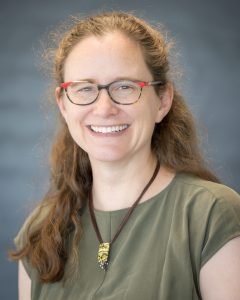
Emily Fletcher, Chair
emily.fletcher@wisc.edu